What Is a Stained Concrete Floor?
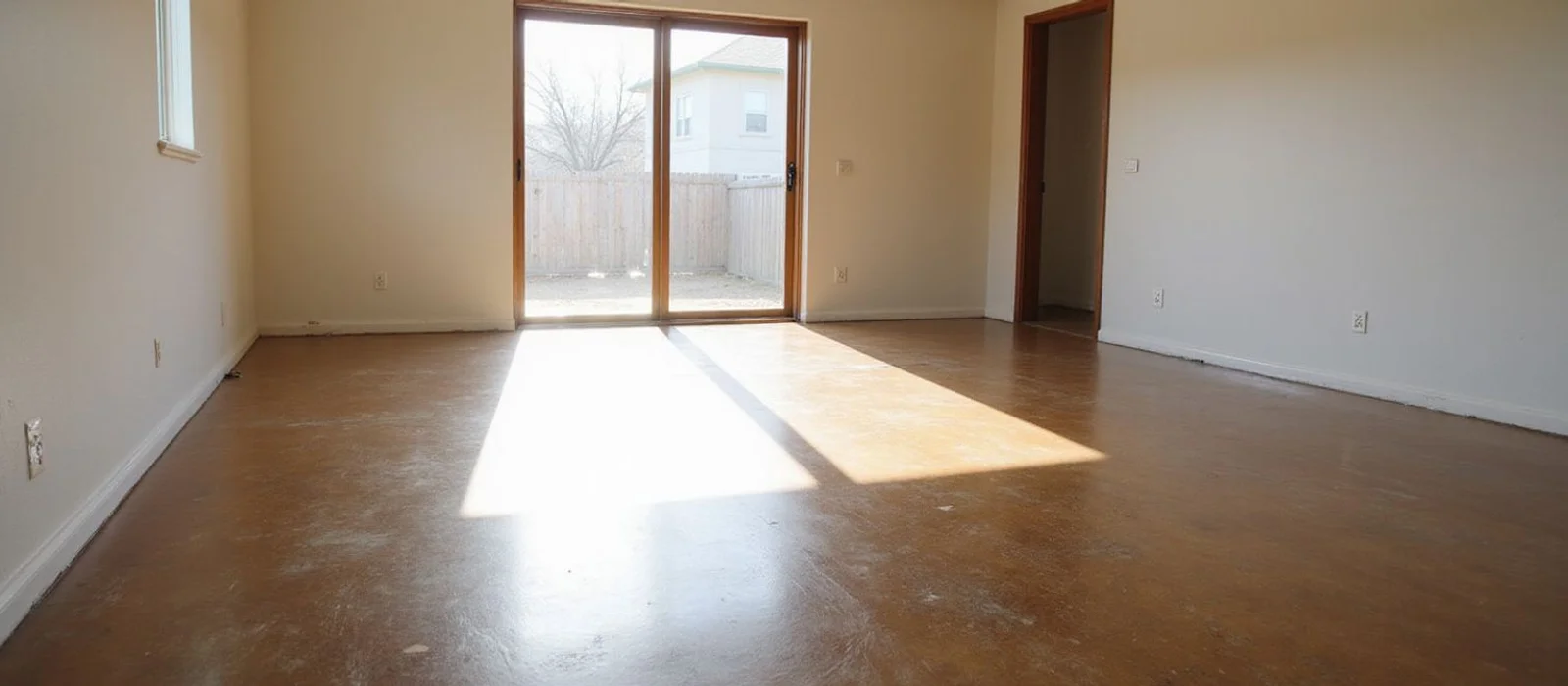
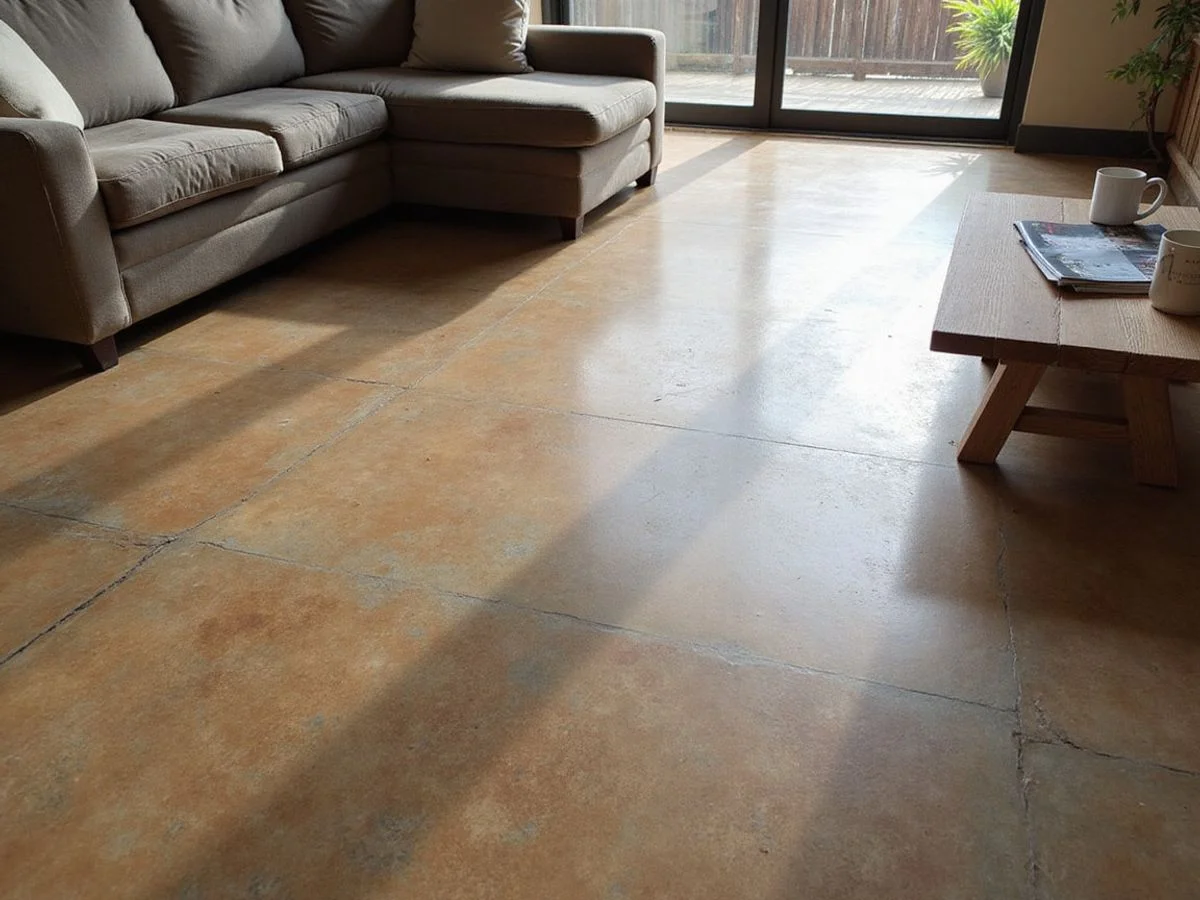
Staining colours the concrete you already own. Rather than laying something on top, the colour goes into the surface of the slab, and a sealer protects it. That is the whole idea, and it is why a stained floor looks like stone or leather rather than like a painted surface.
There are two families of product and they are not interchangeable. Reactive acid stain carries metallic salts that react with lime in the concrete, producing translucent colour with natural mottling that shifts across the slab. Water-based stains and dyes carry pigment into the surface instead, offering a wider colour range and more predictable tone. Dye goes further toward uniform intensity but behaves differently under UV exposure. Integral colour, which is added to concrete before it is poured, is a fourth thing entirely and is not available on an existing floor.
We match the approach to your slab’s condition, porosity, and history, rather than picking the product first and hoping the concrete cooperates.
Types of Stained Concrete Finish
- Reactive acid stain. Earth tones, greys, and greens with variegated movement. Best where slab character is welcome.
- Water-based stain. Broader palette, more even coverage, still affected by porosity variation.
- Dye. Strongest colour intensity, often used for interiors and for layering over a reactive base.
- Stain plus polish. Colour first, then mechanical polishing, for a refined surface with no topical film.
- Stain over an overlay. A microtopping creates a fresh, uniform canvas when the existing slab is too damaged or too patched to stain directly.
Is Your Slab a Candidate?
This is the question that decides everything else, and it cannot be answered from a photograph alone.
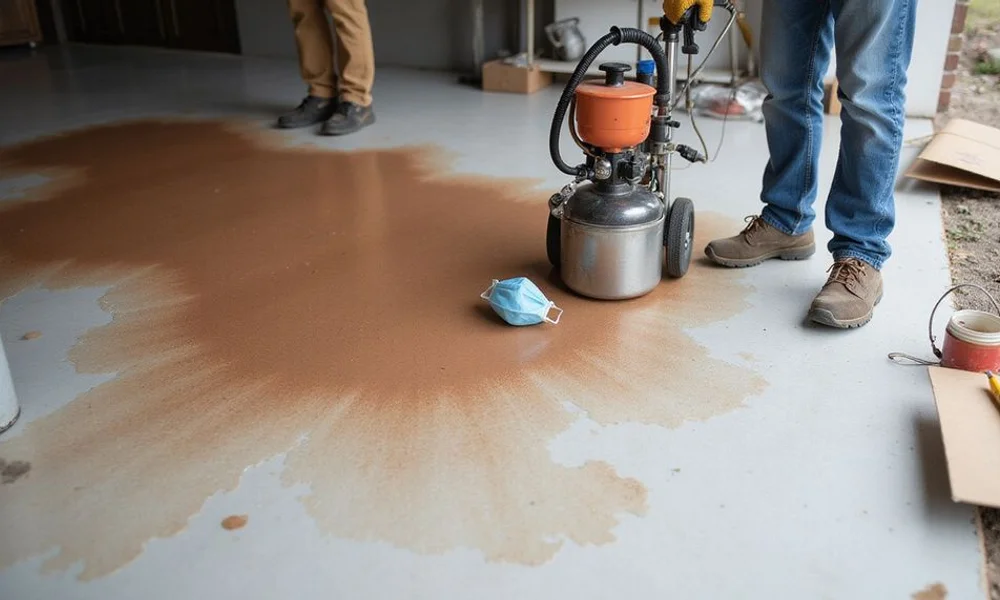
After carpet comes up, you are usually left with tack-strip holes, adhesive residue, and staple marks. After ceramic tile comes up, you are looking at thinset ridges that have to be ground back. Vinyl leaves a mastic film that blocks penetration completely until it is removed. Newer slabs often carry a curing compound that is invisible until you try to stain through it. Any of these can be dealt with. The point is that dealing with them is work, it belongs in the quote, and skipping it is the single most common reason a stained floor disappoints.
Porosity is the other variable. A power-trowelled slab is tight and accepts colour more slowly than an older, more open floor. Patched areas take colour differently from the original pour. Where a slab has had multiple lives, the finished floor shows that history, which is either character or a problem depending on what you were expecting. We would rather have that conversation before the grinder comes out.
How Much Does Staining Concrete Cost in Austin?
We do not publish a rate per square foot, because the number that matters for your project comes from conditions rather than from a category. The main drivers are listed in the pricing section further down this page, and they are the same drivers you should ask any contractor about when quotes come back looking different.
Two quotes that look similar on paper often diverge on preparation. One includes tile removal, full profiling, crack treatment, and two sealer coats. The other includes a clean and a single coat. Both say “stained concrete floor”. Only one of them is going to still look right in three years. Ask what preparation is included, what is excluded, how many sealer coats are priced, and whether there is a minimum charge. Our quotes answer all four in writing.
When Stained Concrete Is the Wrong Choice
We would rather lose the job than install a floor you regret, so here is the honest list.
Stained concrete is a hard surface. It does not soften underfoot, and rugs rather than the floor itself will solve that. It highlights slab defects rather than hiding them, so if you need visual uniformity, an overlay or another floor covering is a better fit. It cannot repair structural problems, and no decorative finish should be sold as if it can. And if the slab carries a moisture problem, that has to be understood before any coating or sealer goes down, because trapped moisture is what turns a good-looking floor into a peeling one.
Sealers, Sheen, and Living With the Floor
The sealer is not an afterthought. It determines how the colour reads, how the floor feels underfoot, how much light the room bounces around, how slippery it is when wet, and how the floor wears in traffic paths.
Matte finishes hide dust and scuffing best and read as the most natural. Satin sits in the middle and suits most living spaces. Gloss deepens colour perception and looks striking in photographs, but it shows everything and it is the least forgiving in an entry or a kitchen. Penetrating sealers sit in the concrete rather than on it, so there is no film to peel, while film-forming acrylics and polyurethanes give more sheen and more protection at the cost of eventual renewal.
Whatever we install, you get care guidance for that system: the cleaner to use, what to avoid, how to handle grit and spills, and what the signals are that the sealer is due for attention. We do not hand out a universal resealing interval, because traffic, sunlight, and maintenance decide it.
If you are still weighing quotes, the cost of staining concrete floors in Austin breaks down which line items actually move the number, and acid stain versus water-based stain covers the product distinction that gets blurred most often. Staining is one of seven services we run as a decorative concrete contractor in Austin, so if the assessment points somewhere else, we will say so.