Serving Austin since 2001

Epoxy & Metallic Epoxy Floor Coatings in Austin

Epoxy, metallic epoxy, and garage floor coatings, with honest system and preparation guidance.

Pricing: Quote-based, with dated company data, inclusions, and minimum charges disclosed in writing.

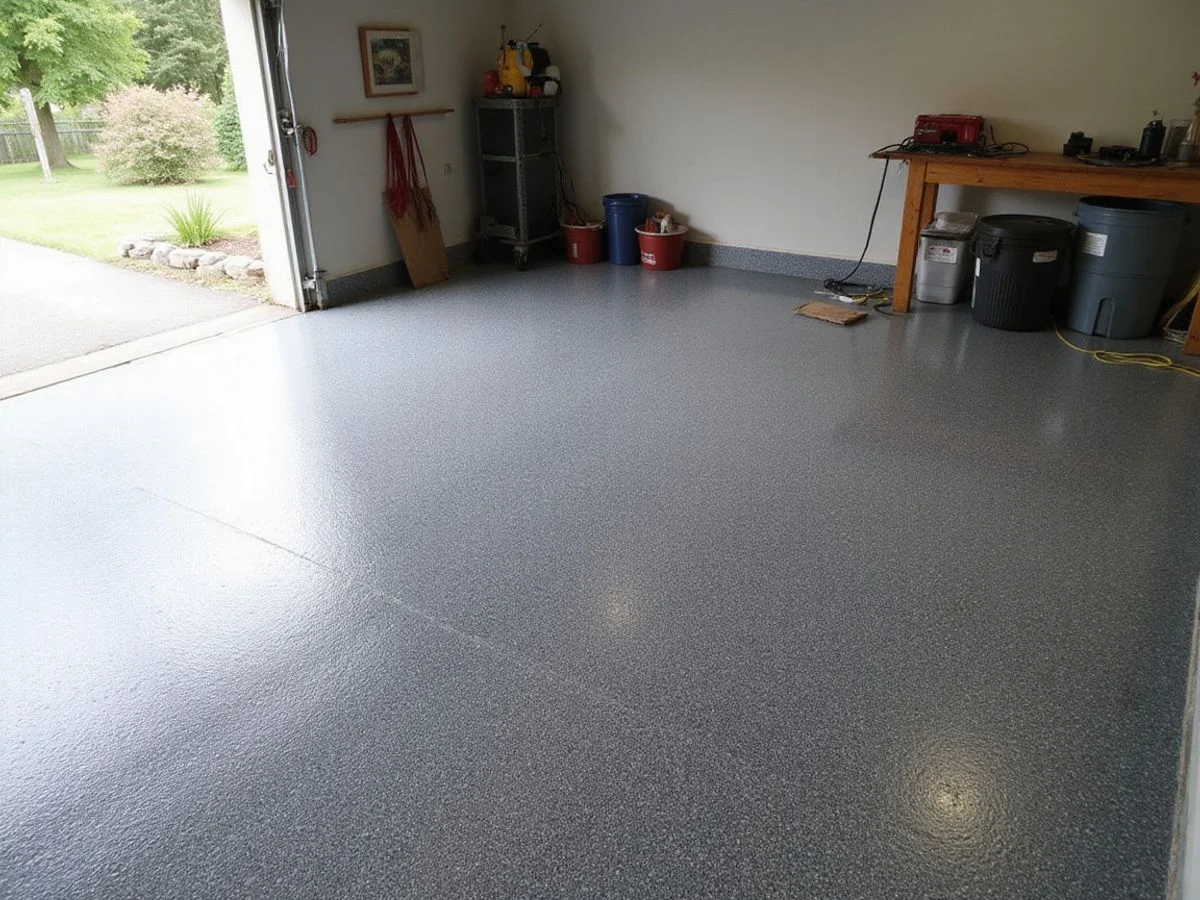
Grey flake epoxy coating on a residential garage floor
  • Serving Austin since 2001
  • Decorative concrete specialists, not a general remodeler
  • Seven confirmed service lines
  • Published editorial standards and technical review

What an Epoxy Floor Really Is

An epoxy floor is a coating system, not a treatment of the concrete itself. That distinction drives everything else. A stained or polished floor works with the slab; a coating sits on it and depends entirely on the bond between the two. Get the bond right and you have a tough, chemical-resistant, easily cleaned surface that shrugs off a workshop. Get it wrong and you have a floor that looks superb for a year and then starts lifting at the edges.

Three things decide which outcome you get: mechanical preparation, moisture, and film build. None of them is visible in the finished floor, which is exactly why they get cut from cheap quotes.

The Systems We Install

  • Standard epoxy. High-build resin systems for garages, workshops, and commercial floors where durability and chemical resistance matter.
  • Metallic epoxy. Pigments worked while the resin is wet to create swirled, reflective depth. A decorative choice, used where the floor is meant to be looked at.
  • Vinyl flake systems. Chips broadcast into the base coat and sealed under a clear build, giving texture, grip, and a floor that hides dust.
  • Polyaspartic topcoats. Fast-curing and UV-stable, used over epoxy for quicker return to service and better hot-tyre performance.

Preparation and Moisture: The Part Nobody Photographs

We diamond grind. Every time. Grinding opens the surface to a profile the coating can key into, removes contaminants and weak surface paste, and gives us an honest look at the slab underneath. Acid etching, which is what most consumer kits recommend, does not produce a comparable profile and can leave salts behind that undermine the bond later.

Then we test for moisture. Central Texas slabs swing with the seasons, and vapour moving up through concrete is the most common cause of coating failure we see. Calcium chloride or relative humidity testing gives us a number rather than an assumption. If the reading is high, we say so, and the options are a moisture mitigation primer, a more tolerant system, or in some cases a recommendation not to coat at all. We would rather have that conversation before you pay for a floor than after it blisters.

Garage Floors in Particular

Garage slabs are their own category. They see hot tyres, oil and brake fluid, dropped tools, and everything that comes in off the driveway. They also tend to be the least carefully finished slab in the house, with a fall to the door, control joints running through the middle, and pitting near the apron.

A flake system handles this well: the broadcast adds texture for grip, hides the dust and marks that a solid colour advertises, and disguises minor slab irregularities. Underneath it, the same rules apply, which is preparation, moisture, and enough film build to survive a hot tyre sitting on it in August.

What It Costs and Why Quotes Differ

The cost drivers are listed in the pricing section below. The short version is that system choice, preparation, and moisture mitigation account for most of the spread between quotes, and only one of those three is visible in the finished floor.

A quote that is dramatically cheaper than the others is usually cheaper because it assumes the slab is clean and dry, skips real grinding, and puts down a thin build. It will look identical for the first few months. Ask any contractor what profile they are grinding to, whether moisture testing is included, how many coats are priced, and what the warranty actually covers.

When We Say No

We will tell you not to coat a slab that is actively wet, that has a structural problem, or that is failing in a way a coating would only hide. We will also steer you away from epoxy in a living room, because stained or polished concrete usually gives a better result there. Recommending the wrong system is a quick way to sell one job and lose the next five.

Before you compare numbers, what epoxy floor coatings cost in Austin sets out where the spread between quotes comes from, and slab preparation and moisture testing before epoxy explains the step that cheap quotes leave out. Coatings are one part of what we do as a decorative concrete contractor in Austin, which is why we can point you at a different finish when the slab calls for one.
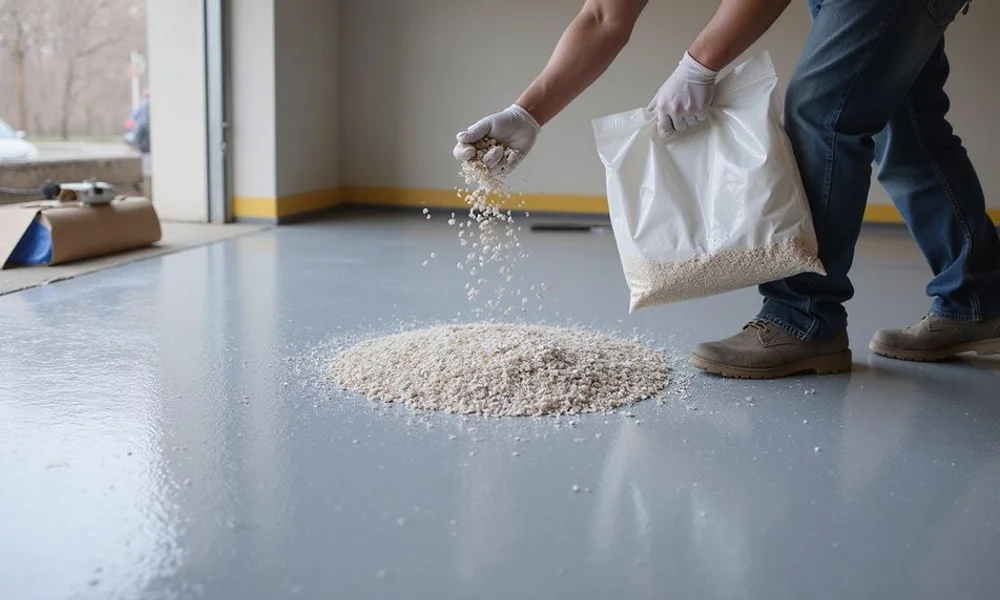
Vinyl flake being broadcast into wet epoxy on a garage slab
Vinyl flake being broadcast into wet epoxy on a garage slab. Illustrative image, not a photograph of a completed company project.

What is included

  • Epoxy, metallic epoxy, and polyaspartic systems specified for the actual use
  • Garage floor flake and chip coatings, including slip-resistant options
  • Diamond-grind slab preparation to a proper concrete surface profile
  • Moisture testing before any coating is specified
  • Honest system-fit recommendations, including when not to coat
Pricing

How much does epoxy floors cost in Austin?

We quote from your slab and scope. Here is what actually moves the number, so you can compare quotes on equivalent terms.

Coating system: standard epoxy, metallic epoxy, flake build, or a polyaspartic topcoat.

Square footage, and whether the area is a single open bay or several cut-up spaces.

Slab preparation, since diamond grinding to a proper profile is what makes a coating stick.

Moisture test results, and whether a mitigation primer is needed before coating.

Repairs: pitting, spalling, control joints, and previous failed coatings that must come off.

Number of coats and whether slip additives or a clear build coat are specified.

Cure schedule, since fast-return polyaspartic systems cost more than multi-day epoxy builds.

Minimum charges on single-bay garages where mobilisation dominates.

Why there is no price list on this page

A published rate per square foot would be a guess dressed up as a fact. Our quotes carry dated company data, the inclusions, the exclusions, and any minimum charge, so you can hold us to them. Quote-based, with dated company data, inclusions, and minimum charges disclosed in writing.

Request a Free Stained Concrete Quote
Why us

Why choose us for epoxy floors

Moisture testing before product selection

Most coating failures in Central Texas trace back to moisture nobody measured. We test first.

Mechanical profiling, never acid etching

A store-bought acid wash does not create a real profile. Diamond grinding does, and that is what bonds.

Metallic means metallic

Swirl effects come from actual metallic epoxy. We do not market it as stained or polished concrete.

Honest about hot tyres

Hot-tyre pickup destroys thin coatings. We specify systems that handle it and say when a budget build will not.

Slip resistance considered

A glossy garage or entry gets slippery when wet. Additives are a specification decision, not an upsell.

Clear cure windows

You get told when you can walk on it and when the car can come back, before we start.

Process

How our epoxy floors work runs

  1. 1

    Assess and test

    Slab condition, previous coatings, and moisture testing, because moisture decides whether a coating lasts.

  2. 2

    Mechanical preparation

    Diamond grinding to profile, plus repairs to pitting, spalling, and joints.

  3. 3

    Base coat and broadcast

    Primer and base system applied, with flake or metallic pigment worked while wet where specified.

  4. 4

    Topcoat and cure

    Clear build or polyaspartic topcoat with any slip additive, then the cure window before use.

Finish examples

Epoxy Floors finish examples

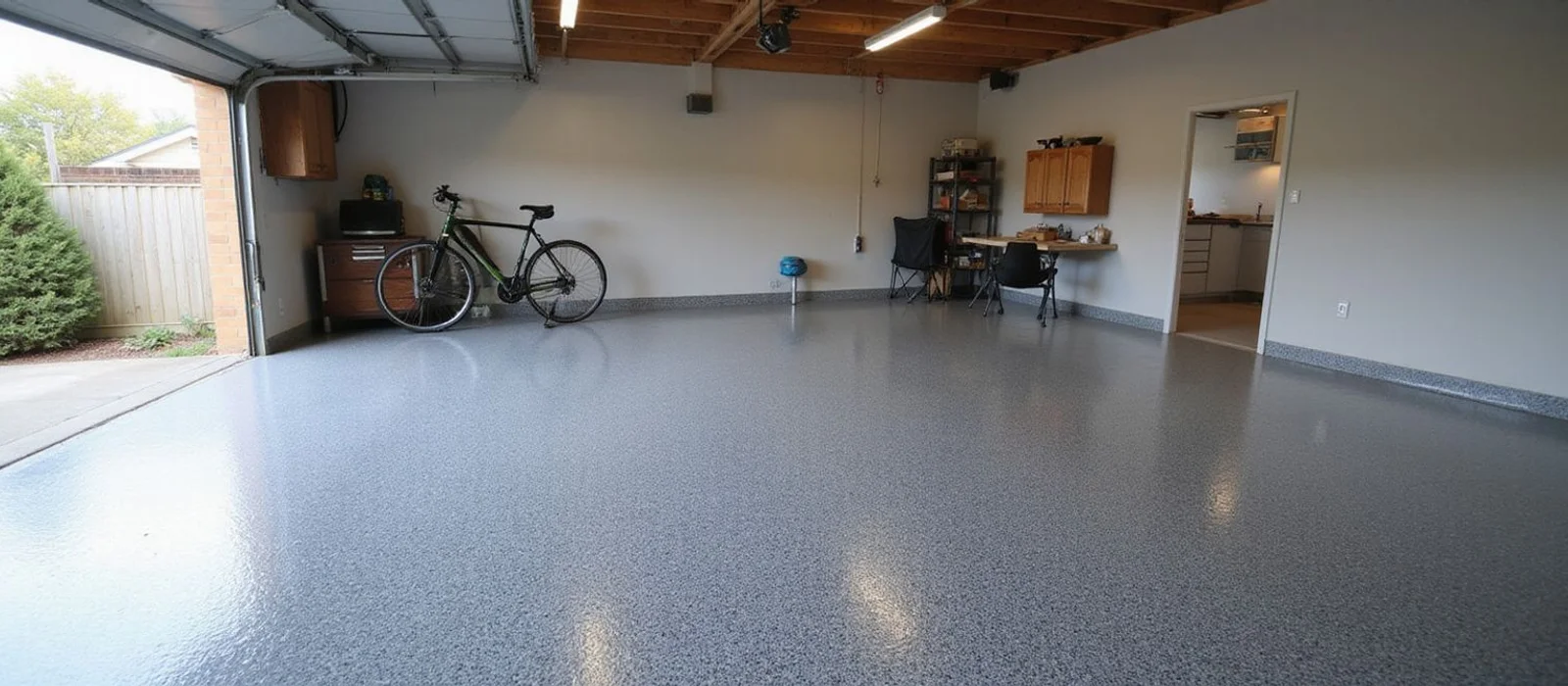
Illustrative examples of the finishes discussed above. Documented project photography is published on the projects page.

Illustrative images of finish types. These are conceptual and are not photographs of completed company projects.

How Austin Stained Concrete Floors Compares

A plain comparison against how this work is commonly quoted. No competitor is named, and every value in our column is something we will put in writing.

FactorTypical providerAustin Stained Concrete
Slab preparationAcid etch or wash and coatDiamond grinding to a specified profile
MoistureNot testedTested before the system is chosen
System namingEpoxy used as a catch-allEpoxy, metallic, or polyaspartic named in the scope
TopcoatSingle-coat buildSpecified coat count with UV and hot-tyre considerations
Slip resistanceNot addressedAdditive specified where the space needs it
Reviews and proof

We publish reviews only once they are real and authorised

There are no customer quotes on this page yet, and we are not going to write any. Reviews go up when they come from named customers who have approved them, and project photos go up when they are our own work with permission to publish. Until then, judge us on the guidance: read a guide, check whether it matches what other contractors tell you, then ask us hard questions.

Questions

Epoxy Floors FAQs

Why does slab preparation matter so much for epoxy?
Because a coating is only as good as its bond. Epoxy needs a mechanically opened surface to grip, commonly described as a concrete surface profile in the CSP 2 to 3 range, which means diamond grinding rather than washing or acid etching. A store-bought etch dissolves some surface paste but leaves the concrete essentially closed, and it can leave salts behind that later push the coating off. Nearly every peeling garage floor we are asked to fix comes down to preparation that was skipped, moisture that was not tested, or both.
What is moisture vapour transmission and why test for it?
Concrete slabs sit on ground that holds water, and water vapour moves up through the slab continuously. If that vapour hits the underside of an impermeable coating faster than the system can tolerate, pressure builds and the coating delaminates in patches or blisters. Calcium chloride and relative humidity testing tell us what is actually happening in your slab before we commit to a product. If the numbers are high, the answer is a mitigation primer or a different system, not optimism.
What is the difference between epoxy, metallic epoxy, and polyaspartic?
Epoxy is the workhorse: a two-part resin that builds thickness, bonds hard to prepared concrete, and resists chemicals well. Metallic epoxy is epoxy carrying metallic pigments that are manipulated while wet to create swirled, reflective movement, which is a decorative choice rather than a performance upgrade. Polyaspartic is a fast-curing aliphatic system, usually used as a topcoat, that handles UV exposure and hot-tyre contact better than standard epoxy and allows quick return to service. Many good floors are a combination: epoxy base for build and bond, polyaspartic top for durability and speed.
Will an epoxy garage floor peel from hot tyres?
A properly prepared and correctly specified system resists hot-tyre pickup. Thin single-part kits over unprepared concrete frequently do not, which is where the reputation comes from. Tyres come off a Texas highway hot, and the plasticisers in the rubber attack weakly bonded coatings. The defence is real preparation, adequate film build, and a topcoat chosen for the job.
How long before I can park on it?
It depends on the system. Fast polyaspartic builds can allow foot traffic the same day and vehicles within about 24 hours. Standard epoxy systems need longer, often several days before vehicles return, with light foot traffic earlier. We give you the actual schedule for the system we are installing, and we would rather you wait a day longer than mark a floor that has not finished curing.
Can you make it slip-resistant?
Yes. A fine aggregate or polymer additive is broadcast into the topcoat, which adds texture without making the floor hard to clean. It is worth specifying anywhere that gets wet, including garages where cars bring rain in. Coarser additives give more grip and hold more dirt, so there is a trade-off we will walk you through.
Is a flake floor better than a solid colour?
Practically, usually yes for garages. The flake broadcast adds texture, hides dust and tyre marks, and disguises minor slab irregularities that a solid colour puts on display. Solid colours look cleaner in a showroom or a commercial space where the floor is kept clear. Neither is stronger on its own; the strength comes from preparation and film build.
Can epoxy go over an existing coating?
Sometimes, with testing, but the default is removal. If the old coating is delaminating anywhere, it has to come off, because a new system bonds to the old one rather than to the slab, and it fails wherever the old one does. Grinding it off costs money and it is money well spent.
Is epoxy right for a living space?
Usually not. Epoxy is built for garages, workshops, and commercial areas where chemical and impact resistance matter. For living areas, stained concrete or polished concrete generally looks better and ages better underfoot. Metallic epoxy is sometimes chosen for feature areas like a bar, a retail floor, or a reception, and it is genuinely striking, but it is a different aesthetic from a stained floor and should be chosen deliberately.

Still deciding?

Send us your room size, the current floor covering, and a couple of photos. We will tell you what the slab needs before you commit to anything.

Request a Free Stained Concrete Quote

Ready to talk about epoxy floors?

Send the room sizes, the current floor covering, and a few photos. We will tell you whether epoxy floors suits your slab before anyone quotes a number.

  • Slab suitability assessed before any colour promise
  • Cost drivers explained in writing
  • Serving Austin since 2001
Quote