What Polished Concrete Actually Is
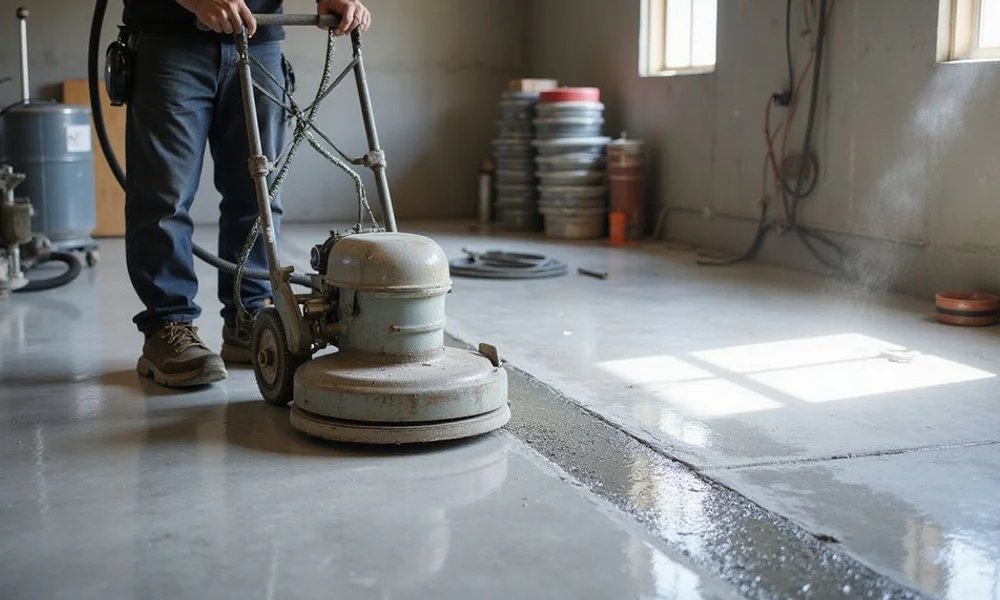
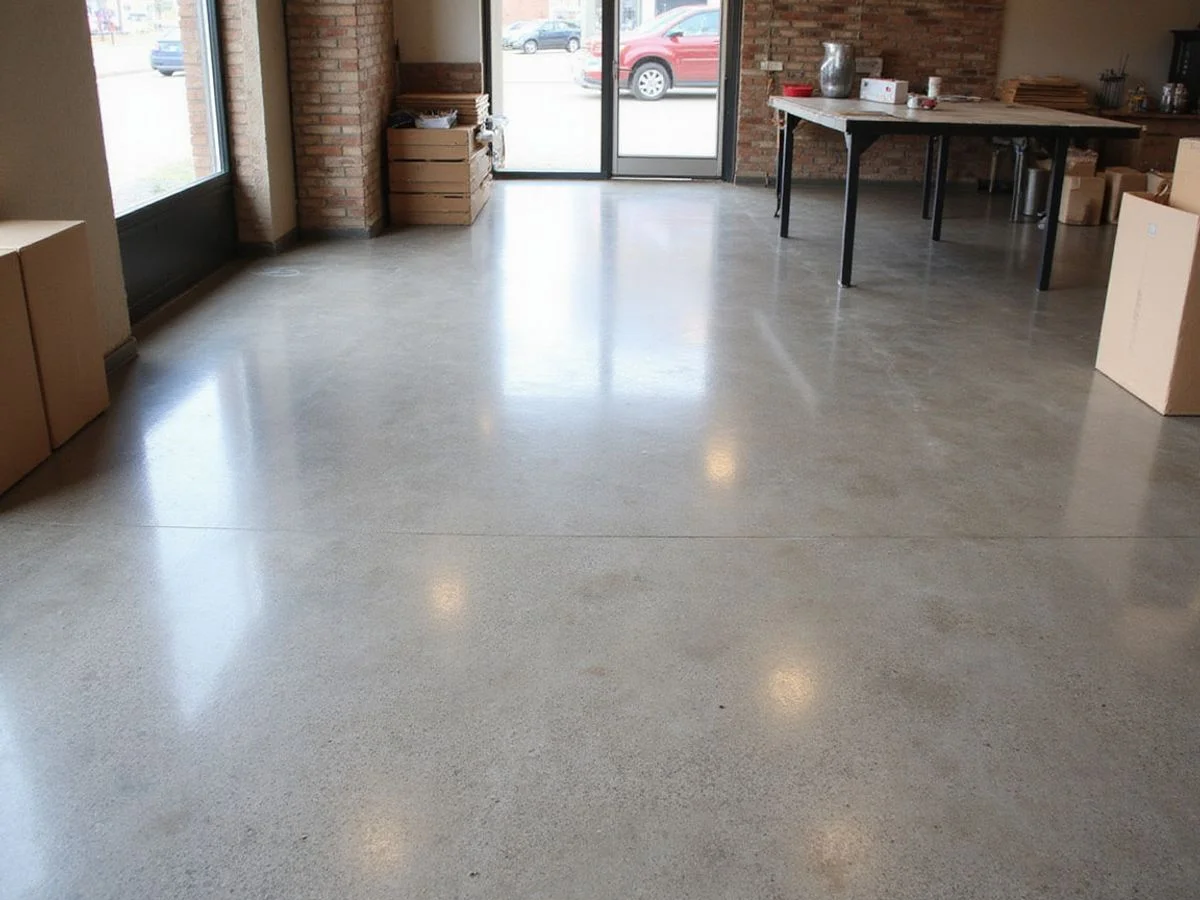
Polished concrete is made, not applied. The slab is ground with progressively finer diamond tooling, hardened partway through with a lithium silicate densifier, and then refined until the concrete itself carries the sheen. Nothing sits on the surface. That is why a polished floor has no film to peel, blister, or wear through in a doorway.
This matters commercially because a lot of floors are sold as “polished” when they are actually ground and sealed. Grind-and-seal is a perfectly reasonable finish, often cheaper up front and sometimes the right call for a slab that will not take a true polish. But it behaves like a coating, because it is one. Ask which you are being quoted, and ask what happens in five years.
The Two Choices That Define the Look
Every polished floor is described by two variables, and picking them early keeps the quote honest.
Aggregate exposure is how deep the first cut goes. Cream leaves the surface paste largely intact for a soft, even look. Salt-and-pepper reveals fine sand and small stone. Full exposure brings up the larger aggregate for something close to terrazzo. Your slab sets the ceiling here: how it was poured and finished determines what is realistically available.
Gloss level is how far the grit sequence runs, from matte through to highly reflective. More stages mean more labour, so gloss is a direct cost lever. It is also a practical one, because the higher the gloss, the more the floor shows.
Where Polished Concrete Suits, and Where It Does Not
Retail floors, cafes, offices, showrooms, warehouses, and open-plan homes all take polished concrete well. It handles traffic without a coating to maintain, reflects light usefully in spaces with limited windows, and cleans with water and a neutral cleaner.
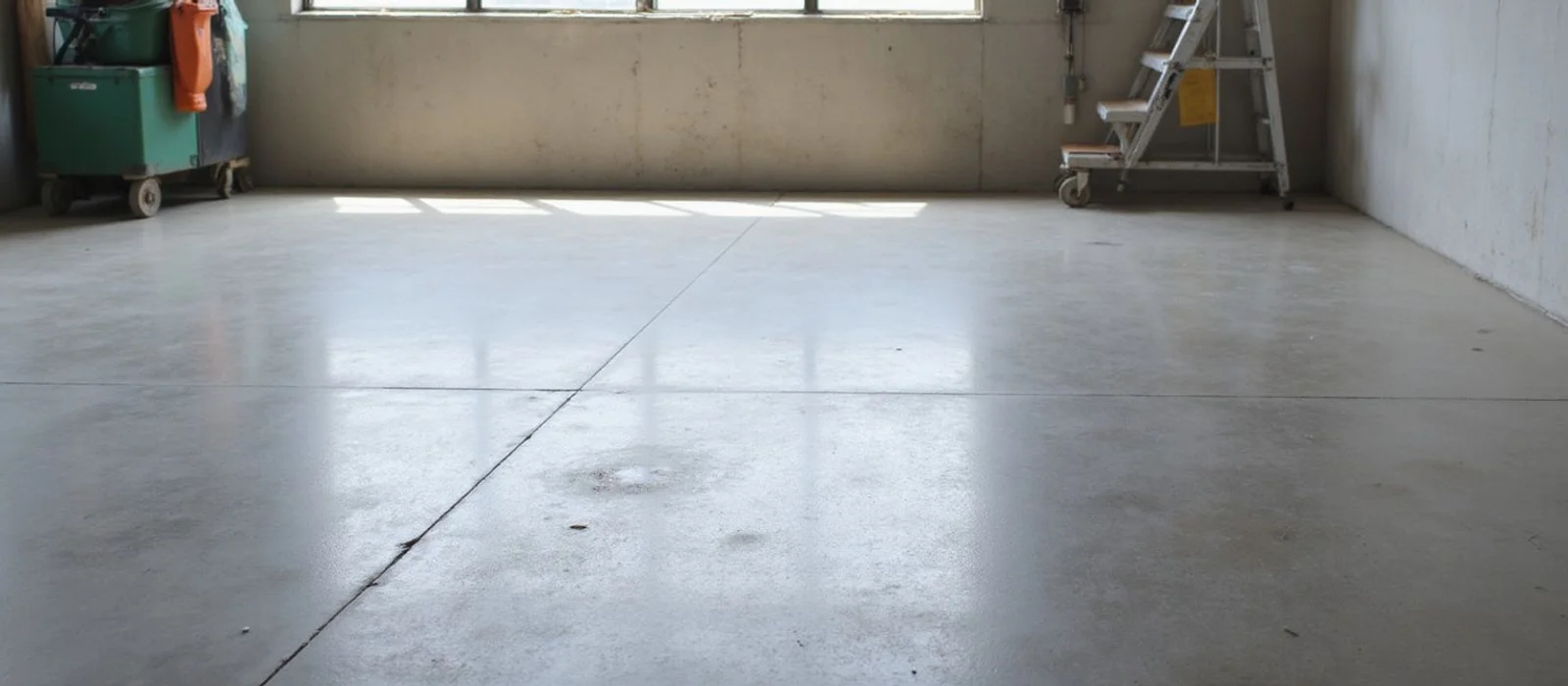
It is a harder sell in small, cut-up rooms where edge work dominates the cost and the machine never gets to run. It is also a poor fit on slabs that are soft, badly patched, heavily trenched, or too uneven to cut consistently, because refinement reveals every one of those conditions rather than hiding them. And in wet areas, gloss and traction pull in opposite directions, so the specification has to be led by safety rather than by the photograph you liked.
What Drives the Cost
Polishing is priced by labour and consumables, and both scale with how many passes the floor needs. A higher gloss level costs more than a lower one because it is literally more work. Deeper aggregate exposure costs more than a cream finish for the same reason. A slab that needs patching, joint filling, or coating removal before polishing adds preparation hours before the sequence even starts.
Area works in your favour. A large open floor is cheaper per square foot than a small one because the grinder spends its time cutting rather than turning. Small rooms can attract a minimum charge, which we disclose up front rather than burying in a total.
Living With a Polished Floor
Maintenance is genuinely simple, which is most of the appeal. Keep grit off the surface, because grit under shoes is what dulls any floor. Dust mop or vacuum regularly. Damp mop with a pH-neutral cleaner. Avoid acidic cleaners, strong alkalis, and anything designed to strip a coating, since there is no coating to strip and those products etch the densified surface instead.
Over years, traffic paths will lose some sheen. The remedy is burnishing or a light re-polish, sometimes called micro-polishing, rather than a recoat. That is the practical advantage of a mechanical finish over a film. We hand over care guidance for the specific floor we deliver, including the cleaners to use and the products to keep away from it.
If you are comparing quotes, what polished concrete floors cost in Austin explains why two prices for the “same” floor can differ by a wide margin, and polished concrete versus grind-and-seal covers the substitution to watch for. Polishing is one of the finishes we run as a decorative concrete contractor in Austin, and we will tell you when your slab suits a different one.