What You Are Actually Paying For
Polishing is a labour and consumables business. Diamond tooling wears, machines take time, and every gloss step is another full pass across the floor. That is why there is no honest single rate for polished concrete, and why the same slab can be quoted at very different numbers depending on the specification.
Here are the drivers, in the order they usually move a quote.
The Cost Drivers
1. Area and layout. This one works in your favour on large floors. A polishing machine is most efficient when it can run in long passes, so cost per square foot drops as open area grows. Small, cut-up rooms with lots of edge work are expensive per foot, because edges are done with smaller equipment and more hand-work.
2. Gloss level. Each step from matte toward high gloss is another set of passes with finer tooling. Going from satin to high gloss is not a small adjustment to the price.
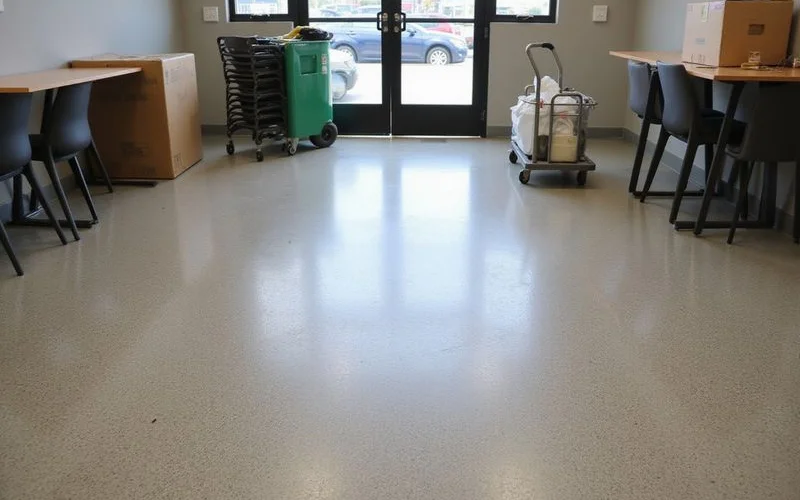
3. Aggregate exposure. A cream finish takes the lightest cut. Salt-and-pepper takes more. Full aggregate exposure takes the most aggressive cutting, with the most tooling wear. Both this and gloss are covered in gloss and aggregate levels.
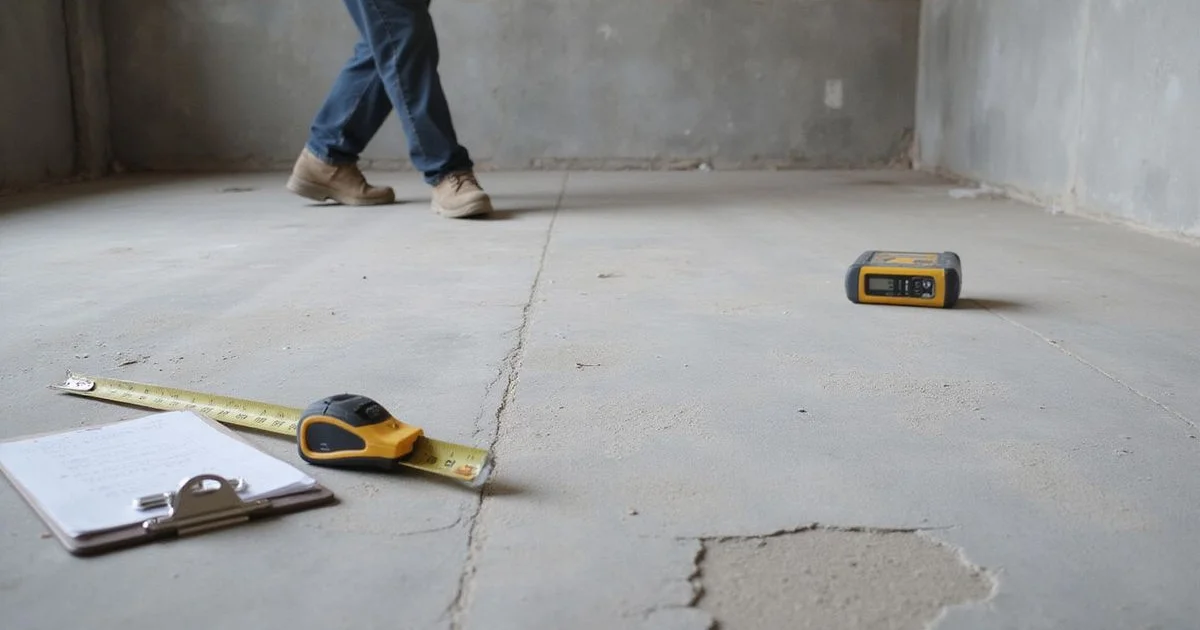
4. Slab condition. Soft concrete wears tooling faster. Hard concrete cuts slower. Uneven slabs need more work to bring to a consistent plane before refining can start, and badly out-of-level floors may need grinding that approaches its own scope of work.
5. Preparation and removal. Existing coverings, adhesives, coatings, and sealers all have to come off before polishing. Tile and mastic removal is a significant line item, and it is a common source of difference between quotes.
6. Repairs. Crack treatment, joint filling, patching, and spall repair. These are usually necessary rather than optional, since polishing reveals every defect rather than hiding it.
7. Densifier and treatments. Densification is part of a genuine polishing specification. Stain guards and protective treatments are extra, and worth considering in food service and hospitality.
8. Access, hours, and minimums. Stairs, restricted parking, out-of-hours working in occupied commercial buildings, and small areas that carry a minimum charge because setup does not scale down.
How to spot an unrealistic quote
A polishing quote that is dramatically cheaper than the rest is usually a grind-and-seal quote, which is a shorter process with a topical sealer providing the gloss. It is a legitimate finish at a legitimate price. It is not the same product, and it should not be priced or described as though it is.
Where Polished Concrete Saves Money
The comparison that favours polishing is total cost of ownership rather than installation.
There is no coating to strip and recoat, so the ongoing maintenance line is cleaning plus an occasional burnish. In commercial settings that difference compounds significantly across a decade, and it comes without the disruption of taking a space out of service to recoat.
If you already own the slab, you are also not buying and installing a floor covering, which is a substantial part of the appeal.
Where It Does Not Make Sense
Small residential rooms rarely justify the mobilisation. Slabs that are soft, badly patched, heavily trenched, or significantly out of level will not give a consistent result regardless of the money spent, and we would rather tell you that during the assessment than mid-job.
Where the slab is not a polishing candidate, the honest alternatives are a grind and seal, a stained and sealed floor, or an overlay that can then be finished. Each of those comes with its own budget, and each is a better outcome than an expensive polish on unsuitable concrete.
Comparing Quotes Properly
Ask every contractor the same five things: how many grit stages, what densifier and at which stage, what gloss level and what aggregate exposure, what removal and repair is included, and what is excluded.
Then compare the answers rather than the totals. Two numbers that look close can describe completely different floors, and the gap shows up in year three rather than at handover.