Serving Austin since 2001

Concrete Overlays & Microtoppings in Austin

Decorative overlays and microtoppings that resurface dated or damaged slabs, within honest limits.

Pricing: Quote-based, with dated company data, inclusions, and minimum charges disclosed in writing.

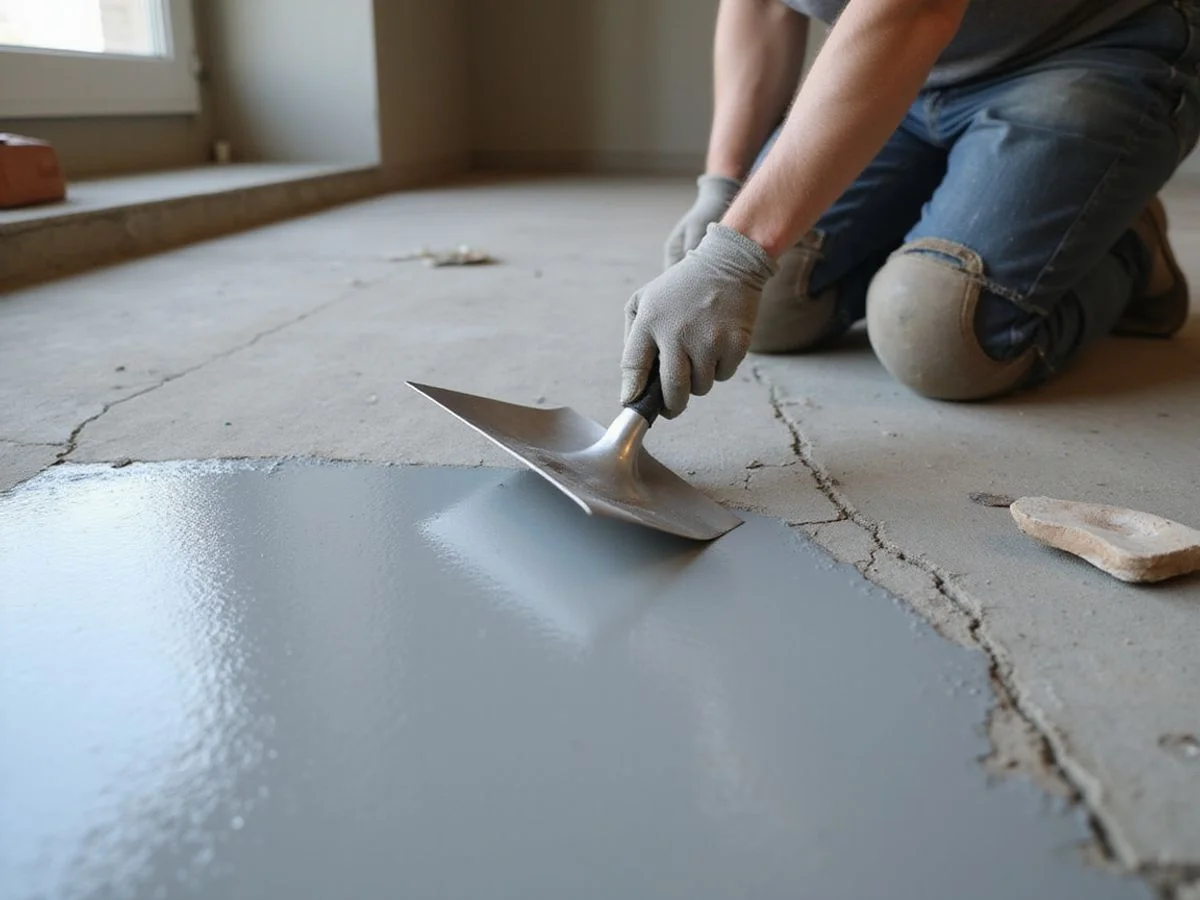
Trowel applying a thin microtopping over an old interior concrete floor
  • Serving Austin since 2001
  • Decorative concrete specialists, not a general remodeler
  • Seven confirmed service lines
  • Published editorial standards and technical review

What an Overlay Does

An overlay puts a new, thin cementitious surface over concrete you already have. Done properly, it gives you a fresh decorative face: even colour acceptance, a chosen texture, and none of the visual history of the slab underneath. It is the practical answer when a floor is structurally fine but cosmetically finished, or when a slab is too patched and too varied for staining to produce a result you will be happy with.

Polymer modification is what makes this possible. Adding polymers to a cement-based mix gives it the flexibility and adhesion to be applied thinly over an existing surface without simply cracking off, which is what a plain sand-and-cement screed would do at that thickness.

The Three Systems

  • Microtopping. A very thin skim that renews the surface appearance while adding almost no height.
  • Decorative overlay. Thicker, capable of carrying texture such as knockdown or hand-troweled finishes, and able to absorb more surface irregularity.
  • Self-levelling underlayment. Poured to correct flatness and falls, usually as a base for a final decorative treatment rather than as the finish itself.

The Limits, Stated Plainly

An overlay is a decorative system. It does not repair structure and it should never be sold as if it does.

If your slab is moving, whether from settlement, from expansive clay drying and swelling through a Central Texas year, or from a structural defect, an overlay bonded to that slab will move with it. Dormant cracks can often be treated and bridged so they do not show. Active cracks will come back through, on their own schedule.

Overlays also inherit the bond quality beneath them. If adhesive residue, a sealer, a curing compound, or a failing coating is left in place, the overlay bonds to that rather than to concrete, and it fails wherever that layer fails. Preparation is not padding in the quote, it is the reason the floor stays down.

When an Overlay Beats Staining

We recommend overlays over direct staining in a few specific situations, and it is usually one of these:

The slab has been patched repeatedly and the patches take colour completely differently from the original pour. Old adhesives have penetrated deeply enough that residue removal will still leave ghosting. There are saw cuts, trenches, or repairs in visually prominent positions. Or you simply want an even, contemporary surface rather than a floor that displays its own history.

In each case, a stained slab would be honest about its past. An overlay gives you a fresh start, and the colour applied to it behaves far more predictably.

Outdoors, Texture Is a Safety Decision

Exterior overlays work well in Central Texas provided the system is exterior-rated and the texture is chosen for how the surface is actually used. Smooth finishes that look excellent in a hallway become a hazard on a wet patio. Knockdown and broom textures add traction and reduce surface heat compared with a dark smooth finish. A UV-stable exterior sealer completes the specification, since interior sealers are not built for sunlight.

Cost and Honest Alternatives

Overlay pricing is driven by system, area, preparation, and texture complexity, which is set out in the pricing section below. Hand-worked decorative textures cost noticeably more than a plain smooth finish, because they are slower and they depend on the installer rather than the material.

If the assessment shows the slab is failing rather than tired, we will tell you that replacement is the better spend, even though an overlay is the job we would rather be quoting. Resurfacing a slab twice costs more than replacing it once, and we would prefer you hear that from us before you spend the money.

For the numbers behind that call, what concrete overlays cost in Austin lists the drivers, and overlays versus resurfacing versus slab replacement walks through where each one stops being the right answer. Overlays sit alongside the other finishes we run as a decorative concrete contractor in Austin.
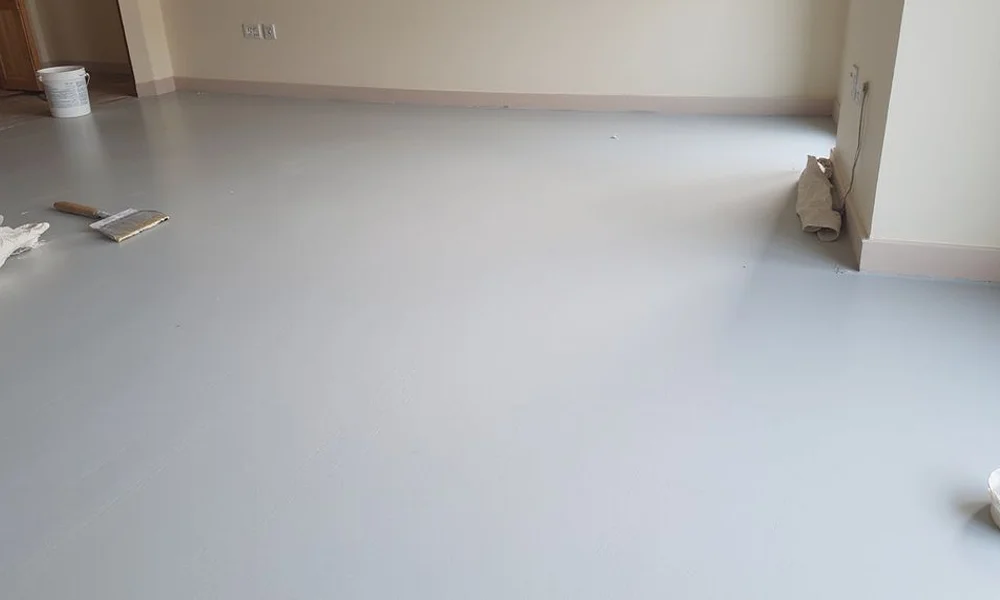
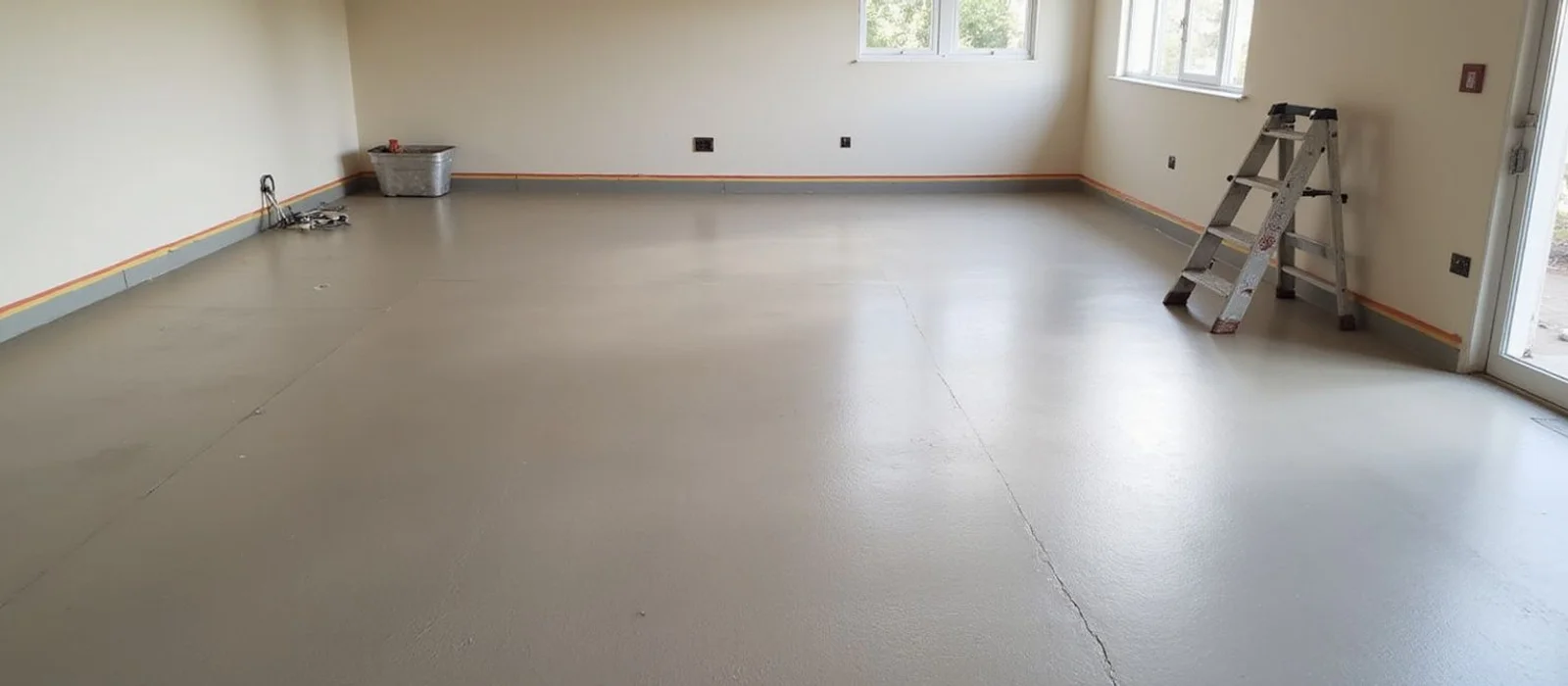
Smooth finished microtopping surface ready for colour
Smooth finished microtopping surface ready for colour. Illustrative image, not a photograph of a completed company project.

What is included

  • Polymer-modified cementitious overlays and microtoppings
  • Supported-substrate assessment before any system is specified
  • Decorative textures and finishes, including smooth and knockdown
  • Clear limits, with no structural-repair promise
  • Overlay versus replacement guidance based on what the slab is doing
Pricing

How much does overlays & microtoppings cost in Austin?

We quote from your slab and scope. Here is what actually moves the number, so you can compare quotes on equivalent terms.

Overlay system: a thin microtopping, a self-levelling underlayment, or a textured decorative overlay.

Square footage and layout, since edges, doorways, and transitions carry disproportionate labour.

Substrate preparation, including profiling and removal of coatings, adhesives, or loose material.

Repairs before resurfacing: crack treatment, spalling, joint handling, and levelling.

Texture complexity, since hand-troweled and decorative finishes take significantly more labour.

Colour and sealer specification applied over the new surface.

Whether control joints need to be honoured or reinstated in the finished surface.

Minimum charges on small areas.

Why there is no price list on this page

A published rate per square foot would be a guess dressed up as a fact. Our quotes carry dated company data, the inclusions, the exclusions, and any minimum charge, so you can hold us to them. Quote-based, with dated company data, inclusions, and minimum charges disclosed in writing.

Request a Free Stained Concrete Quote
Why us

Why choose us for overlays

We say when an overlay is the wrong answer

An overlay follows the slab beneath it. If the slab is moving, resurfacing buys you time and not much else.

Substrate assessed, not assumed

Bond failure almost always traces back to what was under the overlay. We check before quoting.

Realistic about cracks

Some cracks can be treated and bridged. Active structural cracking will telegraph through, and we will say so.

Texture chosen for the setting

Smooth reads beautifully indoors and can be slick outdoors. Texture follows use, not fashion.

A clean canvas for colour

Where a slab is too patched to stain well, an overlay gives you an even surface that takes colour predictably.

Honest about thickness

Microtoppings are thin by design. We explain what that means for door clearances and transitions.

Process

How our overlays work runs

  1. 1

    Substrate assessment

    We check soundness, movement, moisture, and what is bonded to the slab before recommending a system.

  2. 2

    Preparation and repair

    Profiling, removal of coatings and adhesives, crack treatment, and levelling where needed.

  3. 3

    Bond coat and overlay

    Bond coat, then the overlay or microtopping applied to the specified thickness and texture.

  4. 4

    Colour and seal

    Colour applied to the new surface where specified, then the sealer system for the setting.

Finish examples

Overlays finish examples

Illustrative examples of the finishes discussed above. Documented project photography is published on the projects page.

Illustrative images of finish types. These are conceptual and are not photographs of completed company projects.

How Austin Stained Concrete Floors Compares

A plain comparison against how this work is commonly quoted. No competitor is named, and every value in our column is something we will put in writing.

FactorTypical providerAustin Stained Concrete
Substrate checkVisual onlySoundness, movement, and moisture assessed before specifying
Crack handlingSkimmed overTreated, bridged, or declared as a limitation in writing
ClaimsResurfacing sold as a repairDecorative resurfacing, with structural limits stated
TextureOne house styleSpecified for indoor or outdoor use and traction
Replacement adviceRarely offeredWe will recommend replacement when it is the better spend
Reviews and proof

We publish reviews only once they are real and authorised

There are no customer quotes on this page yet, and we are not going to write any. Reviews go up when they come from named customers who have approved them, and project photos go up when they are our own work with permission to publish. Until then, judge us on the guidance: read a guide, check whether it matches what other contractors tell you, then ask us hard questions.

Questions

Overlays FAQs

What is the difference between an overlay and a microtopping?
They sit on a spectrum of thickness. A microtopping is a very thin skim, often a millimetre or two, used to renew the look of a surface that is structurally sound but tired, patched, or discoloured. An overlay is thicker and can carry more texture, handle more surface irregularity, and take decorative treatments such as knockdown finishes or scoring. Self-levelling underlayments are a third category, poured to correct flatness rather than to provide the final decorative face. Which one suits your floor depends on what is wrong with it and how much height you can give up at doorways.
Can an overlay fix a cracked slab?
It can renew the appearance, and it cannot repair the structure. This is the most important limitation to understand. If a crack is dormant, it can often be treated and bridged so it does not telegraph through the new surface. If the slab is still moving, whether from settlement, expansive soil, or a structural issue, the crack will eventually reappear in the overlay because the overlay follows whatever it is bonded to. We assess which situation you are in before we quote, and we will tell you when the money is better spent on the underlying problem.
What surfaces can be overlaid?
Sound concrete is the standard substrate. Existing coatings, adhesives, sealers, and loose material have to be removed or profiled so the overlay bonds to concrete rather than to a film. Some tiled surfaces can be overlaid with the right preparation and system, but this needs assessment rather than assumption, since a bonded overlay is only as stable as what it is stuck to.
Can you stain or colour an overlay?
Yes, and it is one of the main reasons people choose one. An overlay gives a fresh, consistent canvas, so colour lands more predictably than it does on a slab with patches, saw cuts, and varied porosity. Reactive acid stain behaves differently on an overlay than on aged concrete, so the product and the expectations are set for the new surface rather than carried over from a bare-slab job.
How thick is it, and will my doors still close?
Microtoppings are thin enough that door clearance is usually not an issue, though transitions to carpet, tile, or timber still need planning. Thicker decorative overlays and self-levelling systems add enough height that thresholds, door undercuts, and the relationship with adjacent floors need to be worked out before we start. We raise this at quoting because discovering it afterwards is expensive.
How durable is an overlay?
A well-bonded overlay on a sound slab, correctly sealed and maintained, lasts for years in a residential setting. Its life is set by three things: the condition of the substrate, the quality of the bond, and the sealer maintenance. It inherits the slab's behaviour, so a stable floor gives a stable overlay and an unstable one does not.
Can overlays be used outdoors?
Yes, with exterior-rated systems and textures chosen for traction and heat. Central Texas exposure is harsh on exterior surfaces, so colour choice, texture, and a UV-stable exterior sealer matter more outside than in. Smooth interior-style finishes are a poor choice for a patio that gets wet.
Overlay or replace the slab?
Replace when the slab has active structural problems, severe settlement, or damage that resurfacing would merely hide. Overlay when the slab is sound but the surface is tired, patched, stained, or the wrong texture. Cost usually favours the overlay, but not always: a failing slab resurfaced twice costs more than replacement done once. We give you our honest read, including when that read costs us the job.

Still deciding?

Send us your room size, the current floor covering, and a couple of photos. We will tell you what the slab needs before you commit to anything.

Request a Free Stained Concrete Quote

Ready to talk about overlays?

Send the room sizes, the current floor covering, and a few photos. We will tell you whether overlays suits your slab before anyone quotes a number.

  • Slab suitability assessed before any colour promise
  • Cost drivers explained in writing
  • Serving Austin since 2001
Quote