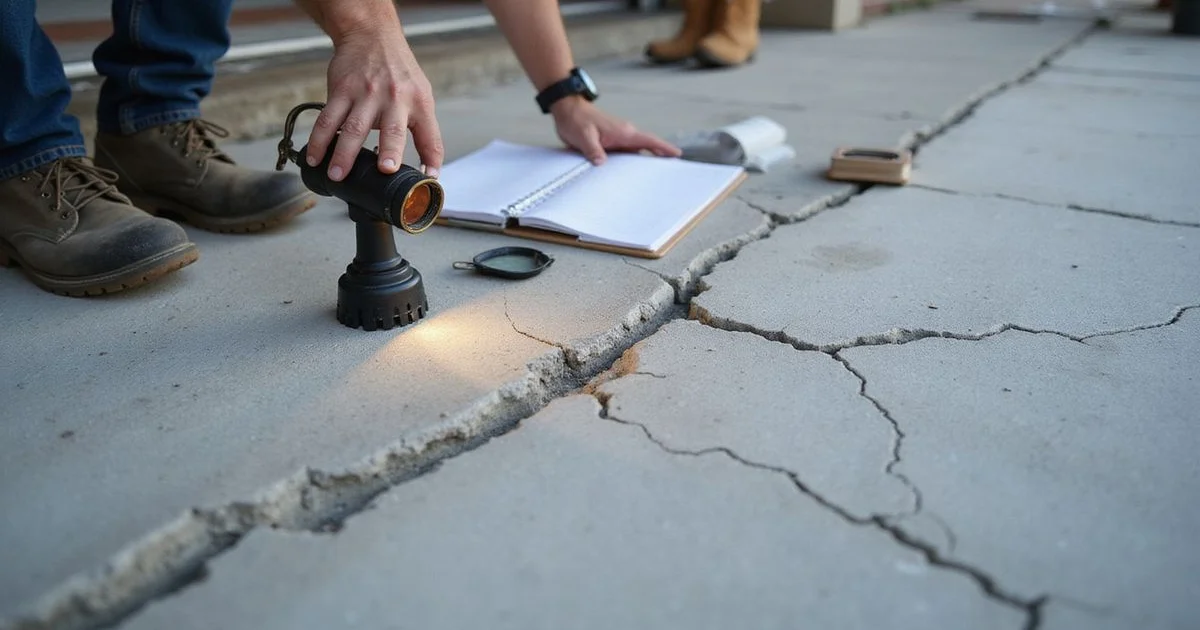
Three Options, One Assessment
When a concrete floor looks bad, there are three honest paths: resurface it with a thin decorative system, build it back up with a thicker overlay or levelling system, or take it out and pour a new slab.
Choosing between them is not a taste decision. It depends almost entirely on what the existing slab is doing, which is why the first step is an assessment rather than a quote. The systems themselves are covered in overlays and microtoppings and in what overlays can fix.
The Deciding Question: Is the Slab Stable?
Everything turns on this.
A stable slab holds its plane. Cracks, if present, are dormant, with no lipping between sides and no seasonal change. There is no rocking, no hollow sound over sections, and no pattern of damage that keeps returning. A stable slab is a good candidate for any of the resurfacing approaches.
An unstable slab is still moving. Signs include cracks that have visibly widened or lipped, doors and frames that have moved with the floor, damage that reappears after previous repairs, and sections that sound hollow underfoot.
Central Texas adds its own pressure here. Expansive clay soils shrink and swell through wet and dry cycles, which is a well-known driver of slab movement in this region. A floor that has moved once with the seasons will likely move again.
Comparing the Three Paths
| Microtopping / resurfacing | Thicker overlay or levelling | Slab replacement | |
|---|---|---|---|
| Fixes appearance | Yes | Yes | Yes |
| Fixes minor unevenness | No | Yes, within limits | Yes |
| Fixes structural issues | No | No | Yes, if the cause is addressed |
| Height added | Minimal | Noticeable, plan transitions | New level entirely |
| Disruption | Low | Moderate | High, demolition and curing |
| Relative cost | Lowest | Middle | Highest |
| Best when | Slab sound, surface tired | Slab sound, plane imperfect | Slab failing or unsuitable |
When Resurfacing Is Clearly Right
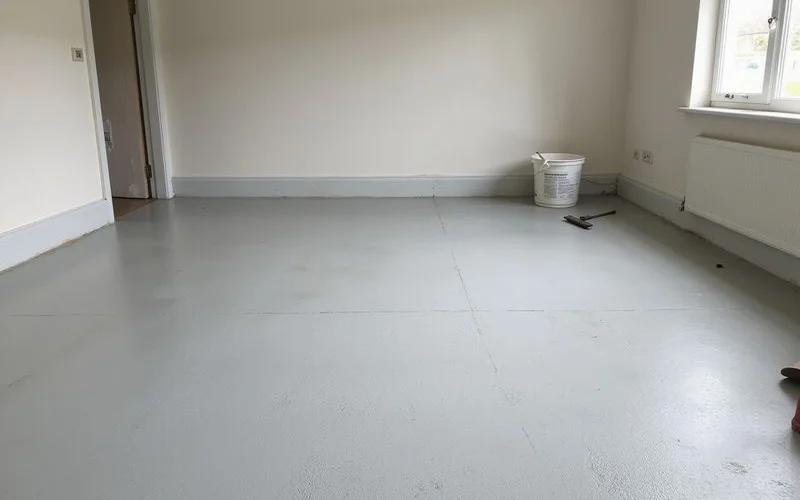
The slab is structurally sound and the problem is cosmetic: old adhesive, patches, discolouration, a dated texture, or a surface that will never stain evenly. This is the most common situation by a wide margin, and a decorative overlay is genuinely the best-value outcome available.
It is also right when height is constrained. Doorways, thresholds, and transitions to adjacent flooring all limit how much you can add, and a microtopping adds the least.
When Replacement Is the Honest Answer
The slab has settled, is actively cracking, has failed sections, or was never built for the use it now has. Also when levels are so far out that a levelling system would be thicker than the situation justifies, or when what is under the slab, drainage, plumbing, or fill, is the real problem.
We would rather tell you this and lose the resurfacing work than take money for a floor that will telegraph the same crack within eighteen months. It is also worth saying that replacement is a different trade, and the honest recommendation may be a conversation with a concreting or structural specialist rather than with us.
The false economy to avoid
Resurfacing a failing slab twice. Each cycle costs money, takes the room out of use, and leaves the underlying problem exactly where it was. Two cycles frequently exceed the cost of replacing the slab once.
The Middle Path People Forget
There is a fourth option that gets overlooked: partial replacement combined with resurfacing.
Where one section of a slab has failed and the rest is sound, taking out and re-pouring the failed area, then resurfacing the whole floor to a consistent finish, can cost far less than full replacement while still addressing the actual problem. The new pour needs time to cure before anything decorative goes over it, so the schedule is longer, but the outcome is genuinely durable rather than cosmetic.
This works when the failure is localised and its cause is understood: a section over a filled trench, an area that was poured separately, or damage from a leak that has since been fixed. It does not work when the whole slab is moving, because you are then patching one symptom of a general condition.
It is worth raising at the assessment stage, particularly on larger floors where full replacement is a substantial project and a thin resurfacing is obviously inadequate. The honest answer sometimes sits between the two obvious options.
What an Assessment Looks At
Crack pattern and whether cracks have lipped. Whether damage has returned after previous repairs. Hollow-sounding areas suggesting loss of support. Doors, frames, and skirting for evidence of movement. Moisture indicators. Existing coverings, coatings, and residue. And level readings across the area to understand the plane.
That inspection takes a modest amount of time and it determines whether the money you are about to spend buys you a decade or eighteen months.