What This Service Is, Precisely
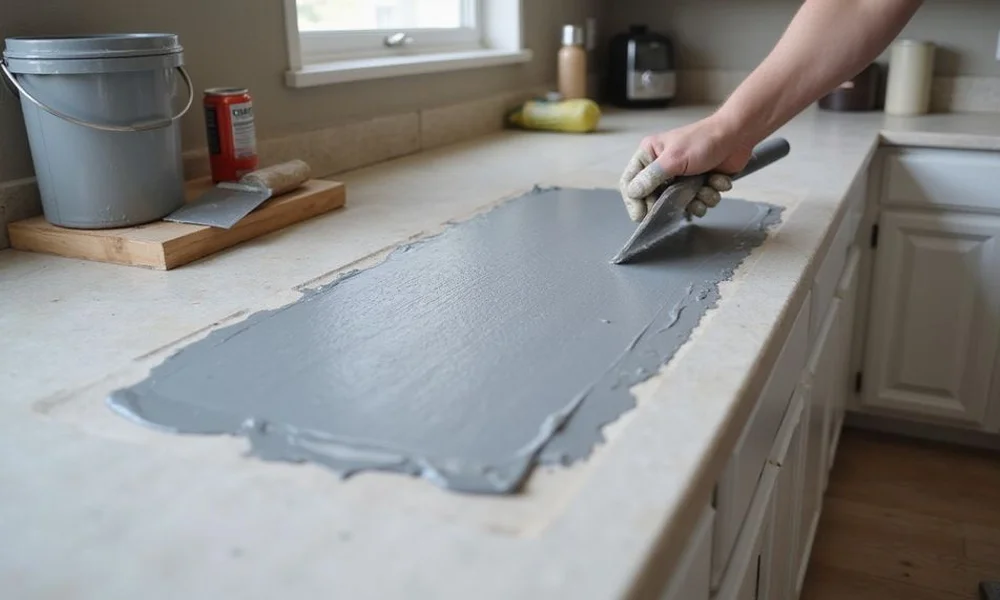
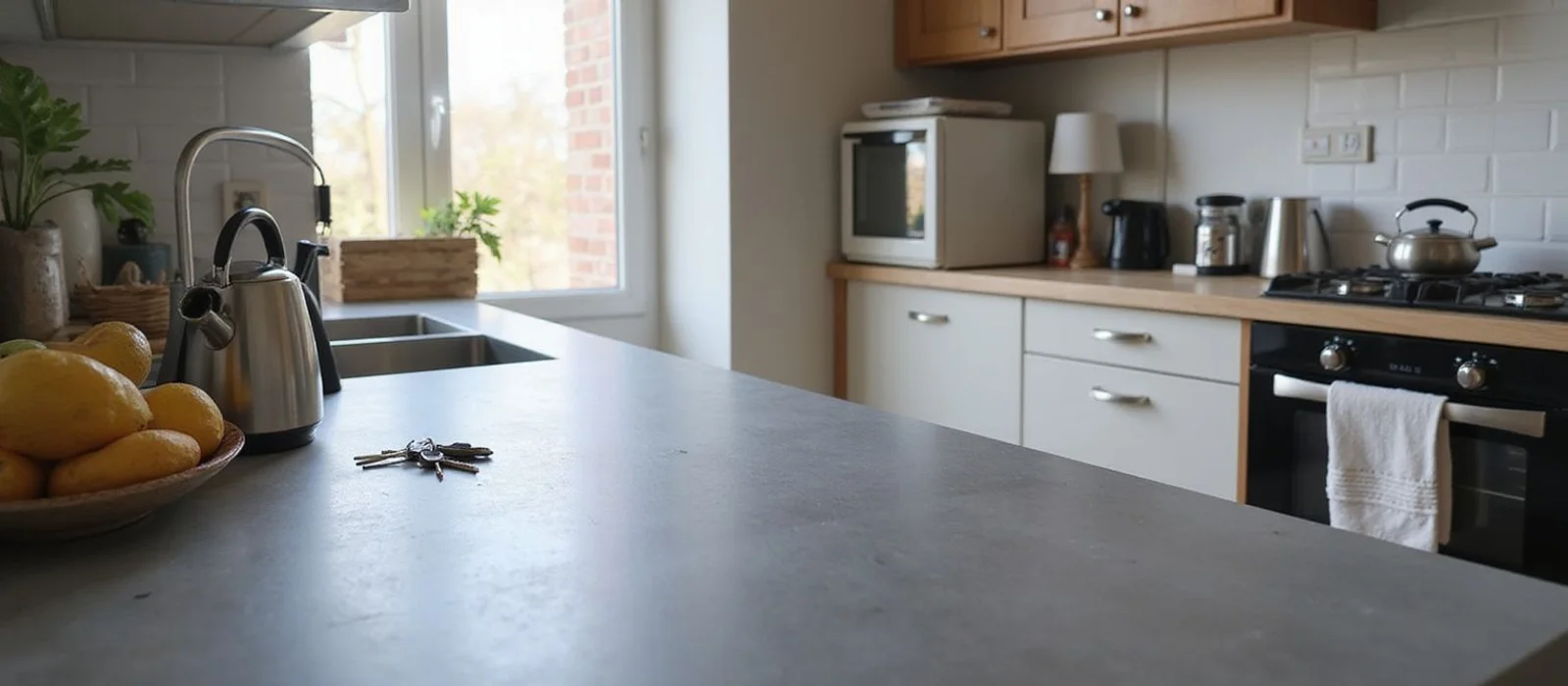
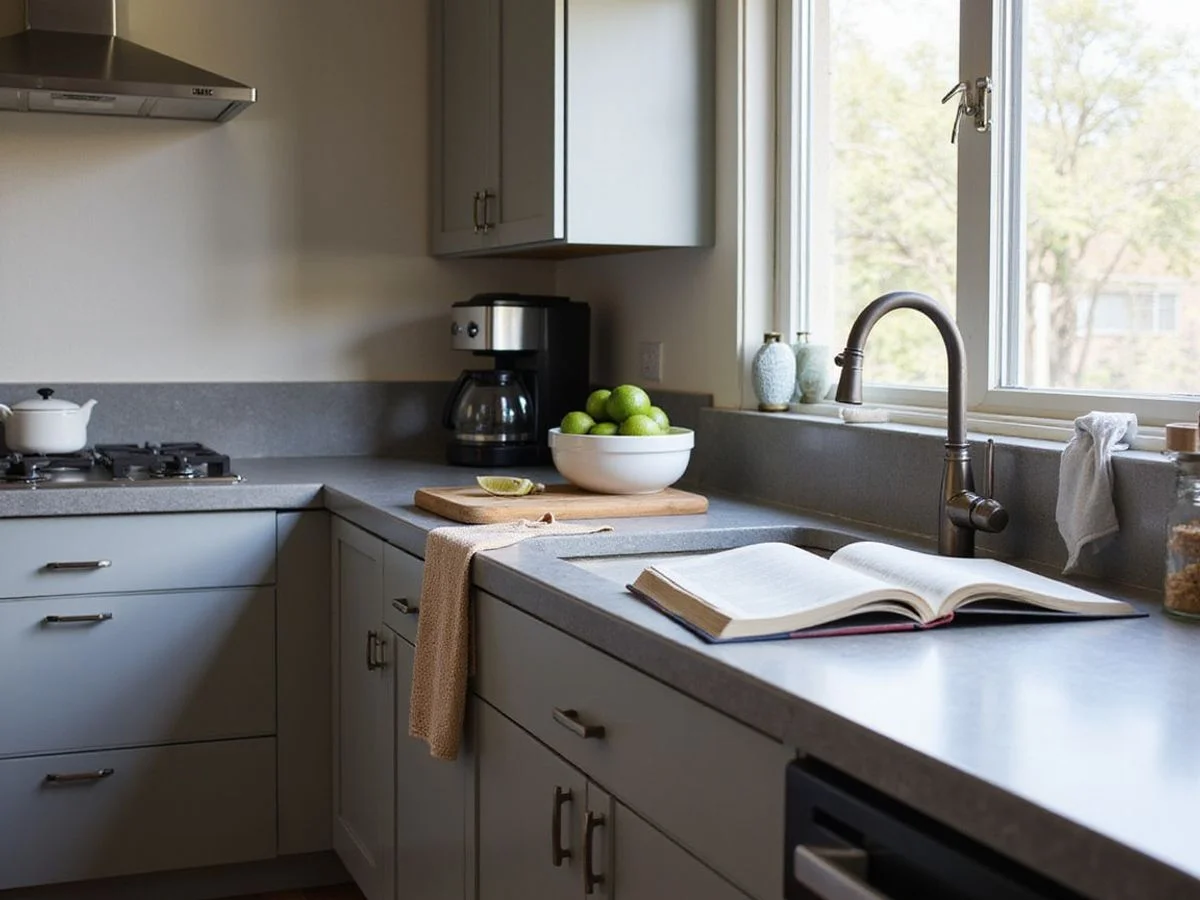
Countertop resurfacing builds a thin concrete-look finish over a countertop you already have. The existing counter stays where it is. We prepare the surface, apply the resurfacing system in coats, shape the edges and cut-outs by hand, and seal the result for kitchen use.
That is deliberately specific, because “concrete countertops” is used loosely in the trade to describe two different things: cast concrete fabricated to order and installed as a new top, and resurfacing systems applied over existing substrates. They cost different amounts, take different time, and behave differently. This page is about the second one, and we will tell you plainly when a project calls for the first.
Is Your Counter a Candidate?
The substrate has to be sound, well fixed, and free of movement. A counter that flexes when you lean on it, that has water damage around a sink, or that is delaminating will not be stabilised by a thin decorative layer. Resurfacing follows what it is bonded to, in exactly the way a floor overlay follows the slab beneath it.
Preparation also has to be able to reach clean substrate. Kitchen counters carry years of cooking oil, cleaning products, and polish, and all of that has to come off before anything will bond properly. Degreasing and profiling are where this job is won or lost.
Where the Labour Actually Goes
- Edges and returns. These are what hands touch and eyes notice, and they are all handwork.
- Cut-outs. Sinks, cooktops, and tap holes take far longer per foot than open run.
- Corners and joins. L-shaped and U-shaped kitchens have more of both than a single straight run.
- Backsplash transitions. Where the top meets the wall needs deciding before work starts.
Sealers and Living With the Surface
A kitchen counter is the hardest-working horizontal surface in a house. It meets acid, heat, oil, knives, and constant cleaning. The sealer is what stands between all of that and the decorative finish underneath, so the sealer choice is the single most important specification decision.
We match the system to how you actually cook. A counter that sees daily heavy use, small children, and red wine needs a different level of protection from one in a guest kitchen. Whatever we install, the rules are similar: use trivets, wipe spills promptly, use a sealer-safe neutral cleaner, and keep abrasives away from it.
Honest Expectations
Decorative finishes vary. A resurfaced counter will have subtle movement and tonal variation, which is what makes it look like concrete rather than like laminate pretending to be concrete. If you want a perfectly uniform, machine-made surface, that is a different product and we will say so.
The finish is also not indestructible. It is a sealed decorative surface, and it needs the same care a natural stone counter does. Heat marks and deep scratches are repairs rather than wipe-ups.
Availability and Scope
This is a scope-limited service. Substrate suitability, current availability, and the specific system we would use are all confirmed before we quote, rather than promised on a web page. If your counter is not a good candidate, we will tell you that and point you toward the option that fits, even when that option is not one of ours.
For the detail behind that scope, what concrete countertop resurfacing covers draws the line between resurfacing and cast fabrication, and caring for resurfaced concrete countertops sets expectations for daily use before you commit. Countertops are the smallest of the seven lines we run as a decorative concrete contractor in Austin.