The Sealer Does the Work
A resurfaced counter is a decorative surface protected by a sealer. Almost everything about caring for it comes down to protecting that sealer, because the sealer is what stands between acid, heat, oil, and the finish underneath.
That is also why care guidance is specific to the system installed rather than generic. Our countertop resurfacing quotes name the sealer, and the handover includes guidance for that product.
Daily Routine
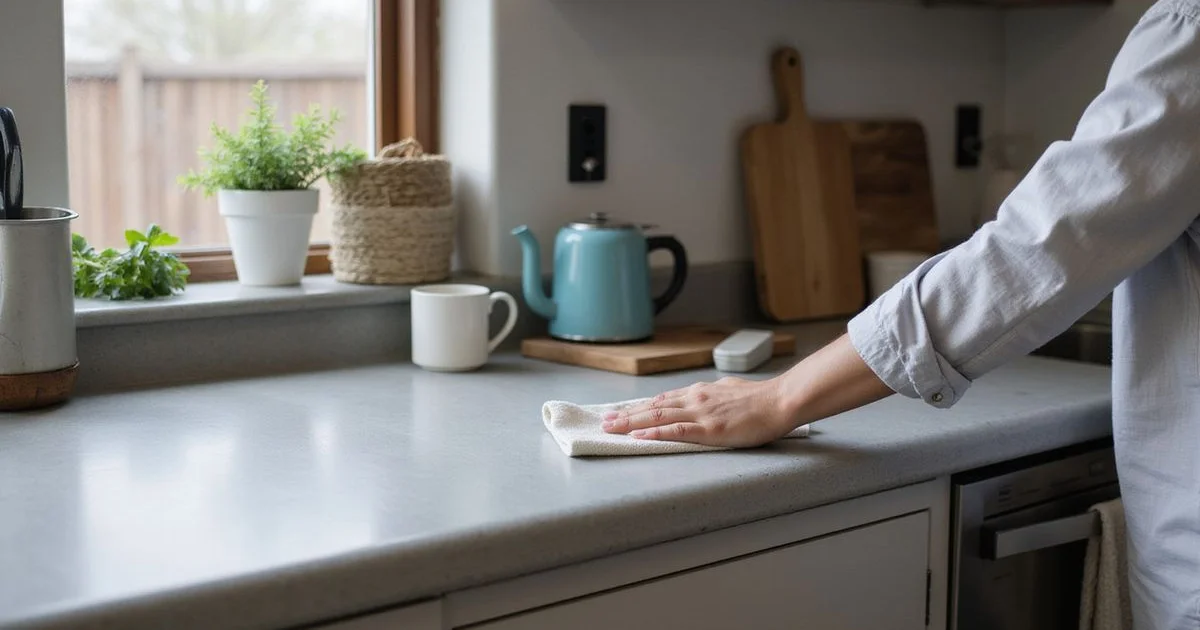
Wipe the counter down with a soft cloth and a mild, pH-neutral, sealer-safe cleaner. That is the whole routine.
Deal with spills promptly, particularly anything acidic: citrus, vinegar, wine, tomato, and cola. Acid attacks both concrete and many sealers, and a citrus spill left overnight can leave a dull etch mark that cleaning will not remove.
Oil and grease deserve the same urgency, since they can darken a surface if left to sit.
What to Keep Away From It
Abrasives. Scouring pads, powders, and magic-eraser style sponges all scratch the sealer. Once the sheen is scratched, the only remedy is refinishing.
Acidic cleaners. Vinegar and citrus-based products are commonly recommended as natural cleaners and are among the worst choices here.
Bleach-heavy and strong alkaline products. These can dull or discolour a sealer over time.
Anything labelled a stripper or a heavy-duty degreaser. These are designed to remove coatings.
The three rules that prevent nearly all damage
Trivets under anything hot. Boards under anything you cut. Wipe spills before they sit.
Heat and Cutting
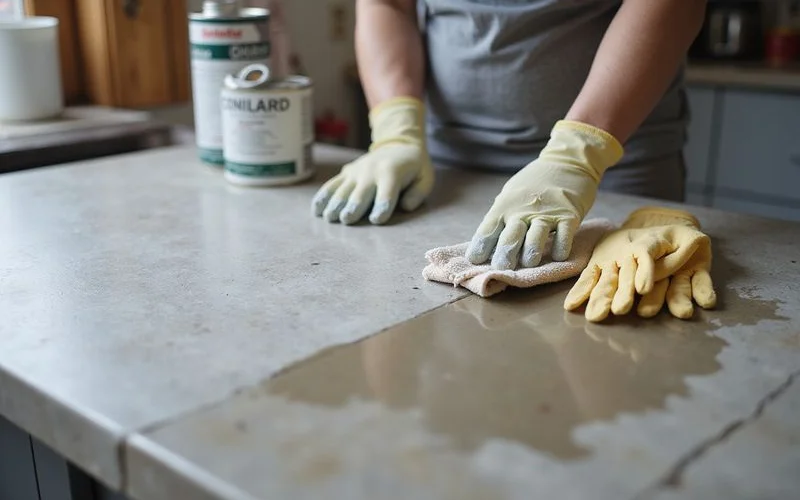
Heat is the most common cause of damage we see on sealed counters. A pan straight from the burner or the oven can soften, discolour, or permanently mark a sealer in seconds. Slow cookers, kettles, and appliances that run hot for long periods deserve a mat underneath them too, since sustained moderate heat does its own quiet damage.
Cutting directly on the surface scratches the sealer and blunts your knives. Use a board.
Recognising When Resealing Is Due
The signals are the same as on a floor, scaled down.
Water no longer beads and instead darkens the surface temporarily where it sits. Spills need more effort than they used to. The area around the sink and the main prep zone has lost sheen compared with the quieter end of the counter. Or the surface simply looks tired after cleaning.
Any of those means the sealer is thinning where the work happens. Acting then is straightforward. Leaving it until liquid is reaching the finish itself turns maintenance into repair.
What Resealing Involves
Typically a thorough clean and degrease, light abrasion so the new product bonds, and fresh sealer applied and cured. The kitchen is out of action for the cure period, which is shorter than the original installation but is not zero.
Compatibility applies here too: the new sealer needs to suit what is already on the counter. If you did not have the original work done by us, we will check before adding anything.
Dealing With Marks That Have Already Happened
Most counters pick up something within the first year, and the response matters more than the mark.
A dull ring from a hot pan is heat damage to the sealer. Cleaning will not lift it, and scrubbing makes the surrounding area duller so the ring becomes more obvious. Leave it and ask, because a localised sealer repair is often possible.
An etch mark from citrus or vinegar is a chemical change in the surface rather than something sitting on it. Same rule: stop, do not escalate.
A dark patch from oil may respond to a gentle poultice approach, and it may not, depending on how far it travelled and how long it sat.
Fine scratches in a satin or matte sealer often become far less visible once the surrounding surface has aged slightly. In a gloss finish they stay obvious.
The instinct in every case is to try something stronger. Resist it. The most common way a small, repairable mark becomes an expensive one is an enthusiastic session with an abrasive pad and a heavy-duty cleaner. Send a photograph and ask first; the answer is free and it is occasionally “leave that alone”.
Realistic Expectations
A well-maintained resurfaced counter handles daily kitchen life. It is a sealed decorative surface, which means it earns the same respect a natural stone counter does, and it rewards a little care with years of good appearance.
If you want a surface you can genuinely ignore, no decorative concrete finish is that surface, and we would rather say so now than have that conversation later. The full scope, including what resurfacing does and does not cover, is set out in what countertop resurfacing covers.