Start With the Diagnosis, Not the Quote
Most restoration enquiries begin with a description of a symptom: the floor has gone dull, it is peeling near the door, there is a white haze that will not mop away, the colour looks washed out in front of the window. Every one of those symptoms has more than one possible cause, and the cause determines the fix.
So we diagnose first. That means looking at the pattern of the failure across the whole floor rather than at the worst patch, checking for moisture where the symptoms point that way, identifying what products are already on the concrete, and running small test areas where the answer is not obvious. Only then is a scope worth quoting.
Recoating a floor without knowing why the last finish failed is the most expensive mistake in this part of the trade, because it produces the same failure again on your money.
What Each Symptom Usually Means
- Dull traffic paths, colour intact. Sealer wear. Usually the straightforward case.
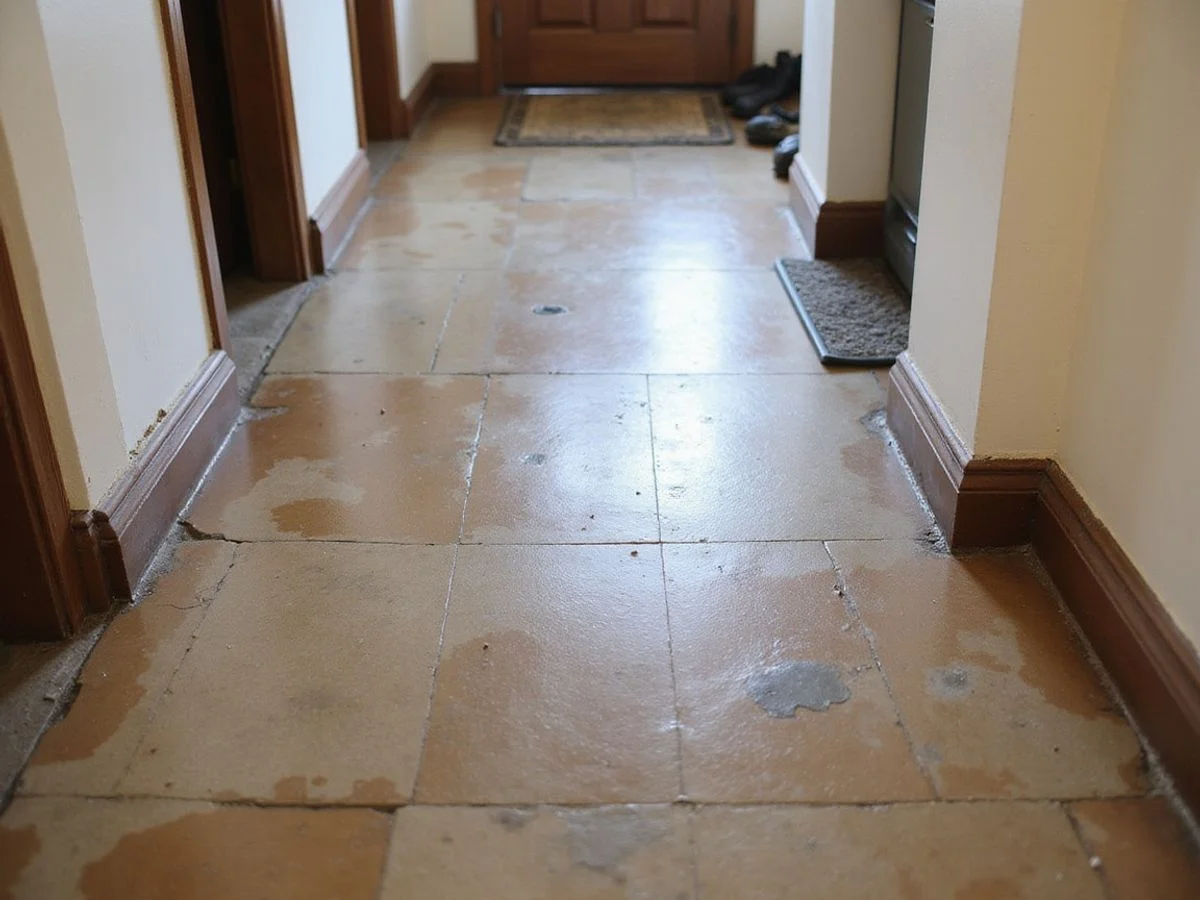
- Peeling or flaking film. A bond failure, often moisture or preparation related.
- Milky or cloudy whitening. Moisture trapped beneath a film-forming sealer.
- White powdery residue. Efflorescence, meaning salts carried to the surface by moisture.
- Genuinely faded colour. UV exposure or abrasion through the coloured surface layer.
- Dark patches that will not lift. Staining that has passed a failed or absent sealer.
Reseal or Restore?
These are two different jobs and we quote them differently.
A reseal is appropriate when the colour is sound and the sealer has simply worn. The existing system is abraded or partly stripped, the floor is thoroughly cleaned, repairs are made where needed, and a fresh sealer goes on. It is the lower-cost route and it is the right one more often than people expect.
A full restoration is required when the finish itself has failed: colour worn through, a coating that has to come off entirely, or surface damage that a new sealer would simply highlight. It involves stripping, surface work, colour restoration, and reinstating the sealer system. It costs considerably more, and we will only recommend it when the evidence supports it.
Moisture, the Usual Suspect
Central Texas slabs move moisture. Seasonal swings between heavy rain and long dry periods drive vapour up through concrete, and any film-forming sealer applied over a slab with high vapour transmission is a candidate for whitening or delamination.
If the symptoms point that way, we test. If the readings confirm it, the conversation changes: mitigation, a more breathable sealer system, or in some cases a recommendation that the floor should not carry a film at all. That is a less appealing answer than “we will recoat it next week”, and it is the one that saves you doing this again in two years.
What We Will Not Do
We will not promise that a decorative restoration repairs a structural problem. We will not coat over an active moisture issue and call it solved. And we will not publish before-and-after images that are not our own documented work, taken on the job, with the customer’s permission.
That last point limits what this page can show you right now, and we would rather have that limitation than fill it with something borrowed. Restoration is published with confirmed scope and real evidence or it is not published at all.
Keeping the Renewed Floor
Once a floor is restored, the maintenance conversation matters more than usual, because the floor has already shown you how it wears. Keeping grit off the surface, using a sealer-safe neutral cleaner, dealing with spills promptly, and putting mats at entries all extend the life of the new system significantly.
We hand over guidance for the specific system installed and the signals that tell you when attention is due, rather than a date on a calendar.
If you are trying to work out which job you are actually buying, when to reseal versus restore a worn stained floor sets out the decision, and resealing versus full floor restoration compares what each scope includes and costs. Restoration is one of the services we run as a decorative concrete contractor in Austin, so the diagnosis is not steered toward the bigger job by default.