The Precise Definition
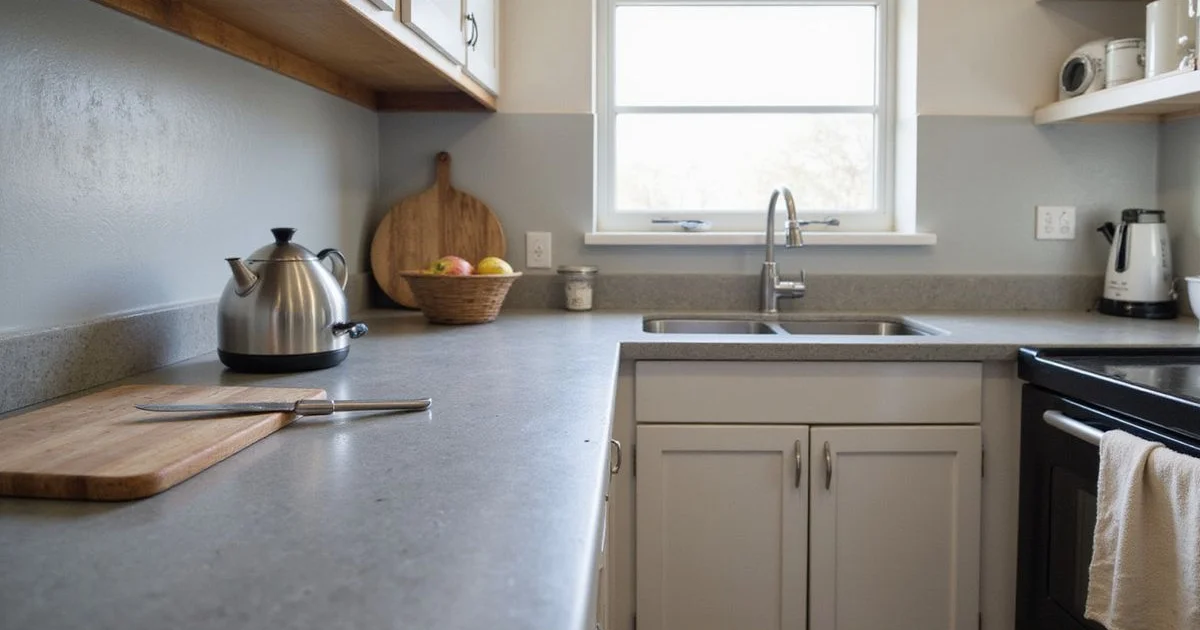
Countertop resurfacing builds a thin concrete-look finish over the countertop you already have. The existing counter stays in place. The surface is prepared, the resurfacing system is applied in coats, edges and cut-outs are detailed by hand, and the result is sealed for kitchen use.
That precision matters because “concrete countertops” is used loosely to describe two different services: cast concrete tops fabricated and installed new, and resurfacing systems applied over existing substrates. Our countertop resurfacing service is the second, and we say so rather than letting the ambiguity work in our favour.
What Makes a Counter a Candidate
Three things have to be true.
Structural soundness. The counter must be solid, properly fixed, and free of flex. If it moves when you lean on it, a thin bonded layer will move with it and eventually crack.
A preparable surface. Years of cooking oils, cleaning products, and polishes have to come off before anything will bond. Degreasing and mechanical profiling are the difference between a finish that lasts and one that lifts at an edge.
No hidden damage. Water damage around a sink, swelling at a joint, or delamination in the substrate all rule out resurfacing, because the new layer inherits whatever is beneath it.
We assess candidacy before quoting rather than discovering it mid-job.
The Process
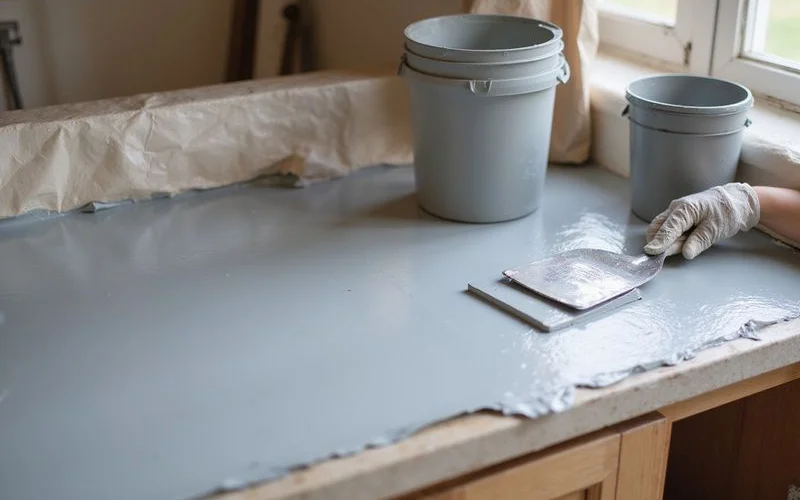
Preparation comes first: cleaning, degreasing, profiling, and masking the kitchen so dust and product stay where they belong. Then coats are built up and worked to the agreed finish.
Edges, returns, and cut-outs take the bulk of the skilled time. These are the parts people touch daily and look at closely, and they cannot be rushed. Sink and cooktop cut-outs are particularly labour-heavy relative to their size.
Finally the sealer system goes on, followed by a cure period before the counter returns to normal service. Light use usually returns before full use does, and we give you both dates.
The limit worth repeating
Resurfacing changes the surface. It does not change the structure, the substrate, or the layout. If a counter is failing, sagging, or water-damaged, replacement is the honest recommendation and we will make it.
Finish and Sealer Options
Concrete-look finishes range from a relatively even, contemporary surface to one with noticeable tonal movement and character. Both are legitimate; the choice is about how much variation you want in a working kitchen.
The sealer is the more consequential decision, because a counter is the hardest-working horizontal surface in a house. It meets acid, heat, oil, knives, and constant cleaning. We match the system to how the kitchen is actually used, and then hand over care guidance for that specific product, which is covered in caring for resurfaced concrete countertops.
Planning Around the Kitchen
The practical question most people ask second, after whether their counter qualifies, is how long the kitchen is out of action.
Application runs over several days depending on the size of the kitchen, the number of coats, and how much edge and cut-out detail there is. Then the sealer needs its cure time, which is not negotiable and is the stage people most often try to shorten.
There are usually two milestones: light use, when you can put things down on the surface and use the kitchen carefully, and full use, when the counter is ready for normal cooking, cleaning, and everything else. Those dates can be several days apart.
Plan for the work area to be masked off and for the kitchen to be partially unusable throughout. Clear the counters completely, including the things that live permanently in the corner, and make arrangements for the appliances that normally sit on the surface.
It also helps to think about sequencing with any other work. Resurfacing is best done after dusty trades have finished and before the kitchen goes back into daily service, and coordinating that properly avoids a finished surface being used as a workbench.
Honest Expectations
The finished surface reads as concrete, with subtle movement and variation. It is durable with reasonable care and it is not indestructible: heat marks, deep scratches, and acid etching are repairs rather than clean-ups.
It also needs the same respect a natural stone counter does. Trivets under hot pans, prompt attention to spills, and a sealer-safe neutral cleaner are not optional extras, they are how the finish stays looking right.
Availability
This is a scope-limited service. Substrate suitability, current availability, and the specific system are confirmed before we quote, and if your counter is not a good candidate we will tell you and point you toward what would actually work.