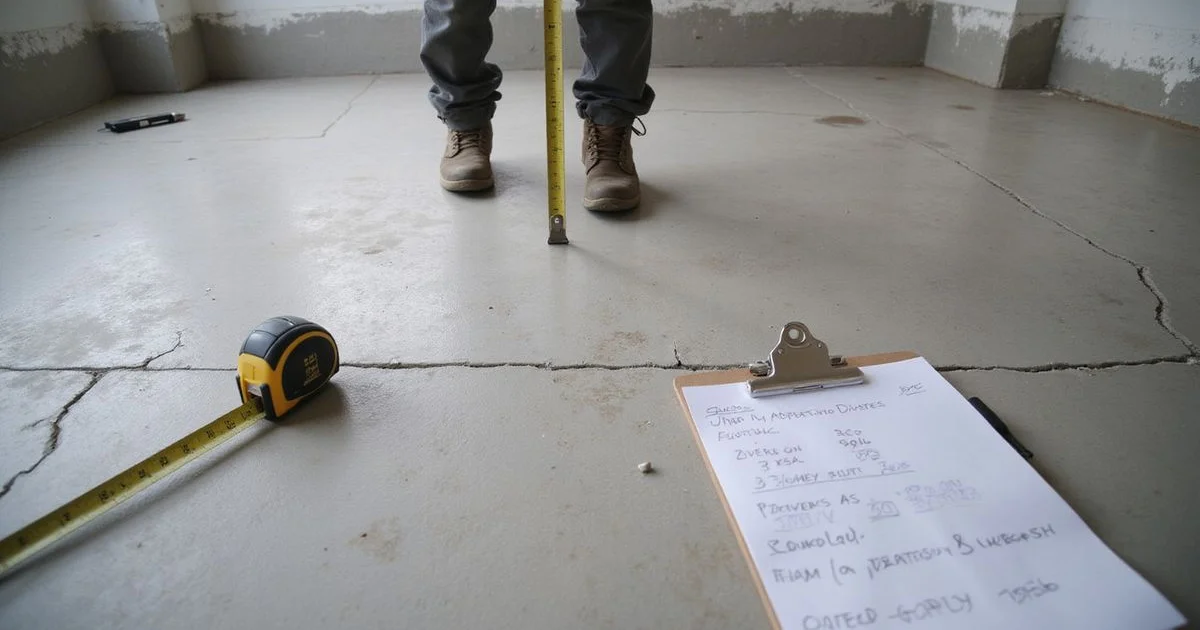
Why Overlay Quotes Vary
The label covers a wide range of work. A thin microtopping over a clean, sound slab and a levelled decorative overlay with repairs and hand texture are both called concrete overlays, and they are different jobs with different costs.
Before comparing prices for overlays and microtoppings, find out which system each quote describes and what preparation it includes.
The Cost Drivers
1. System and thickness. A microtopping uses the least material and the fewest passes. A thicker decorative overlay uses more of both. Self-levelling underlayment, where flatness needs correcting, is a separate scope again and is often the single largest line when it applies.
2. Area and layout. Open floors are more economical per square foot than small cut-up spaces, because edges, doorways, and transitions carry disproportionate hand-work.
3. Substrate preparation. Profiling, and removal of coatings, sealers, adhesives, or loose material. A floor that has been previously coated or tiled costs more to prepare than a bare, sound slab.
4. Repairs. Crack treatment, filling, spall repair, and joint decisions. Necessary work, and the amount is only fully known once the floor is bare.
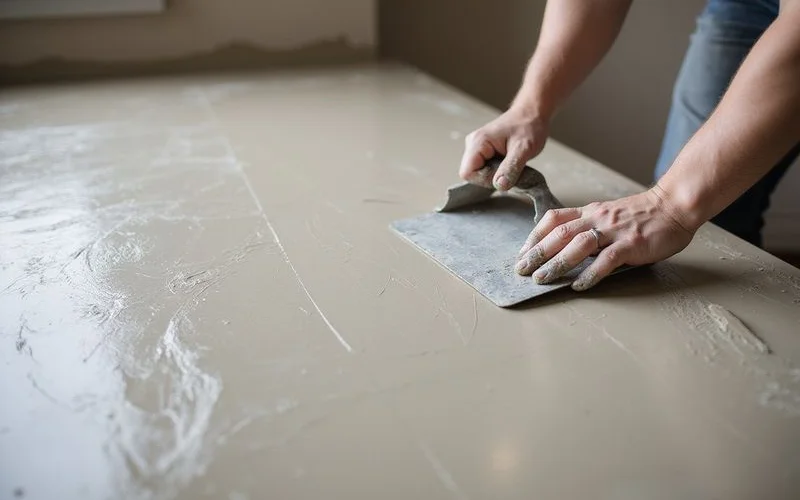
5. Texture complexity. This is the driver people underestimate. A plain smooth finish is quick. Knockdown, hand-troweled movement, scored patterns, and borders are all slow, skilled work that scales with area.
6. Colour and sealer. Colour applied to the new surface, plus the sealer system and coat count. Interior and exterior specifications differ here, and exterior sealers cost more.
7. Control joints and transitions. Whether joints are honoured in the new surface, how thresholds are handled, and how the overlay meets adjacent flooring. These are small areas with large labour content.
8. Access, clearance, and minimums. Furniture and clearance requirements, stair access, and minimum charges on small rooms.
Where an Overlay Saves Money
The comparison that matters is against replacement. Demolishing a slab, disposing of it, preparing the sub-base, pouring, and curing is a far larger undertaking than resurfacing one, and on a sound slab it is unnecessary.
An overlay also frequently saves money against a full floor covering, since you are not buying material to cover the area and there is nothing underneath that needs protecting from moisture in the same way.
Where it stops saving
On a slab that is still moving. Resurfacing a failing floor is money spent on appearance that the slab will undo. Overlay versus replacement covers how to tell the difference, and it is worth reading before you spend anything.
Ways to Reduce Cost Sensibly
Choose a simpler texture. Smooth finishes are the cheapest and often the most contemporary. Do the whole area in one visit rather than phasing it, since mobilisation is charged each time. Clear the space completely before the crew arrives. And accept a standard colour treatment rather than layered feature work.
What not to cut: preparation, repairs, and sealer coats. Those are the three that determine whether the overlay is still attached and still looking right in five years.
What Is Only Knowable Once the Floor Is Bare
Overlay quotes carry more genuine uncertainty than most flooring work, and an honest contractor says so up front rather than discovering it on day two.
Until the existing covering comes off, nobody knows how much adhesive is bonded to the slab, how many patches are under there, whether the surface has been previously coated, or how flat the floor actually is. A carpeted room can hide a trenched and patched slab. A tiled kitchen can hide a second adhesive layer from an earlier floor.
So a good quote does two things. It prices the known work precisely, and it states clearly how variations will be handled: what triggers a variation, how it gets priced, and that you will be told before the work proceeds rather than after.
A quote with no variation clause at all is not more certain, it is just less honest about the same uncertainty. Either the contractor has padded the number to absorb whatever they find, or the conversation is coming later when you have less leverage.
We would rather show you the range and the trigger points than present a single confident figure we cannot stand behind once the floor is open.
Getting a Comparable Quote
Ask what system and thickness, what preparation and removal is included, what repairs are allowed for and what happens if more are found, what texture is specified, what colour and sealer, and what is excluded.
Our quotes cover all of that, along with any minimum charge, on the same page as the number. Where we share cost data from past work, it is dated and scoped, because a handful of projects is company data rather than an Austin market average.