Coating Versus Surface
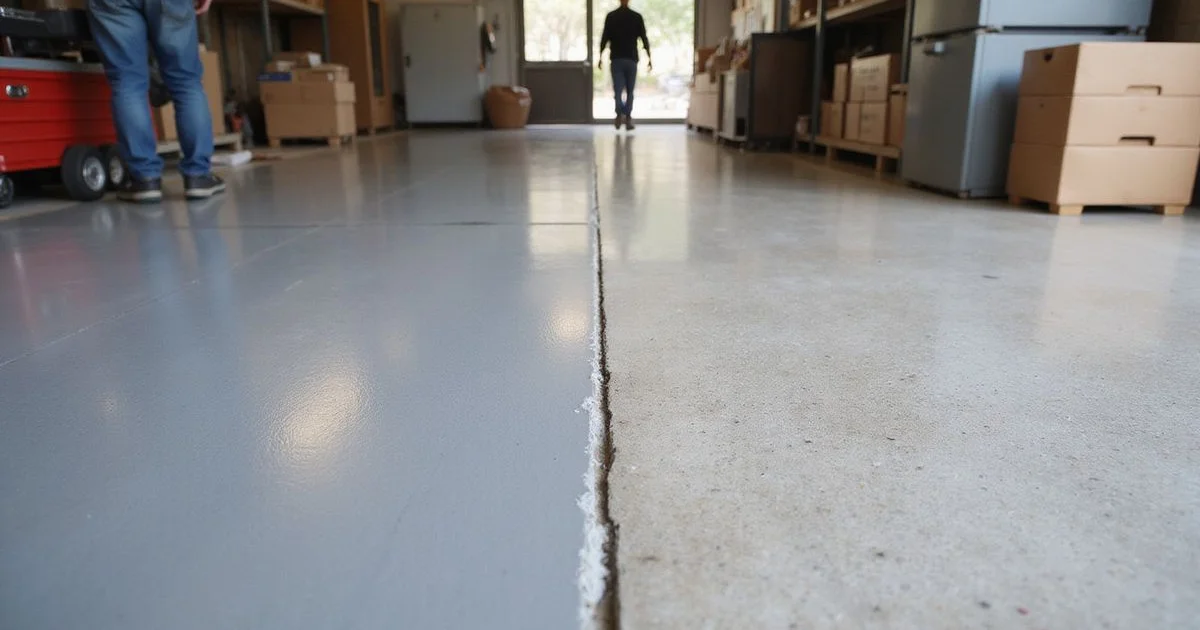
These two are often quoted against each other, and they are fundamentally different approaches to the same slab.
Epoxy adds material. A resin system is applied over prepared concrete, building measurable thickness and creating a new surface that carries all the wear and all the protection.
Polished concrete removes material. The slab is ground and refined until the concrete itself is the finished surface, hardened by a densifier rather than protected by a film.
That difference drives everything: how they resist things, how they age, how they are repaired, and where they belong.
Side by Side
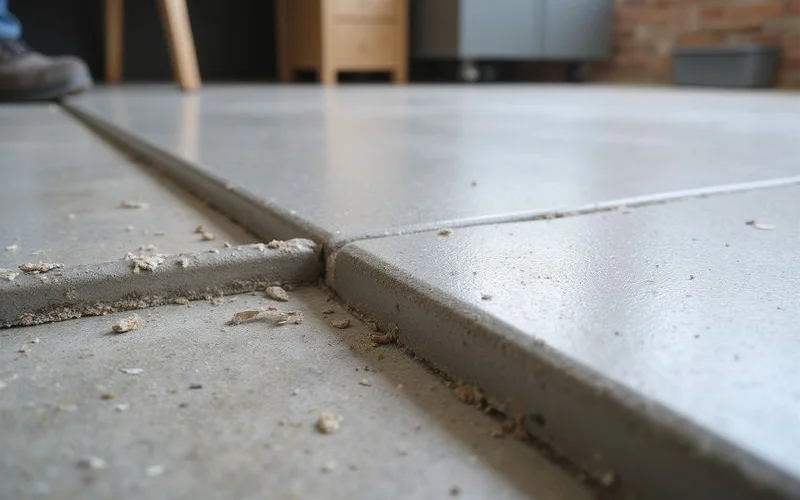
| Epoxy | Polished concrete | |
|---|---|---|
| What it is | A coating over the slab | The refined slab itself |
| Chemical resistance | High | Moderate, guard optional |
| Impact resistance | Good, absorbs and spreads | The slab’s own resistance |
| Wear behaviour | Film wears, then needs recoating | Abrades slowly, burnish to refresh |
| Moisture sensitivity | High, requires testing | Low, no film to lift |
| Appearance options | Solid colour, flake, metallic | Grey to aggregate, dye optional |
| Slip resistance | Additive required | Depends on gloss level |
| Renewal | Strip or prepare and recoat | Burnish or re-polish |
| Ongoing cost | Recoating cycles | Cleaning plus occasional burnish |
Where Epoxy Clearly Wins
Anywhere chemicals, oils, or solvents hit the floor. Workshops, plant rooms, commercial kitchens, laboratories, and garages.
Anywhere the floor takes impact from dropped tools or equipment. The coating absorbs and spreads impact that would chip an exposed concrete surface.
Anywhere you want a specific colour or a decorative effect that concrete cannot produce, particularly metallic swirl work or a bright brand colour.
And anywhere the slab is poor enough that polishing would look bad. A coating covers, a polish reveals.
Where Polished Concrete Clearly Wins
High-traffic public spaces, where the maintenance economics dominate. Retail floors, showrooms, galleries, and hospitality areas take enormous foot traffic without a film to wear through.
Spaces with slab moisture concerns, since there is no impermeable layer to delaminate.
Spaces where the concrete’s own appearance is wanted, including exposed aggregate that no coating imitates convincingly.
And anywhere the disruption of periodic recoating would be genuinely costly, since polished floors are refreshed in place with a burnisher.
The question that resolves most cases
What is the floor defending against? If the answer involves chemicals, vehicles, or dropped steel, that is an epoxy conversation. If the answer is feet and time, polished concrete will outlast it with less intervention.
The Moisture Factor in Central Texas
This deserves its own weight locally. Slabs here swing significantly through the year, and vapour transmission is the leading cause of coating failure we are asked to remediate.
Epoxy requires testing before specification and, where readings are high, either a mitigation primer or a different approach. Polished concrete does not carry the same risk, because there is no film for vapour to push against.
That does not rule out epoxy. It does mean an epoxy quote that includes no testing is a quote with an unpriced risk attached. Slab preparation and moisture testing before epoxy covers what that testing involves and what the readings actually mean.
Cost Over Time
Installation cost varies too much by specification to generalise usefully. The more reliable comparison is over a decade.
Epoxy’s ongoing cost is a recoating cycle, at an interval set by traffic, plus the disruption of taking the space out of service. Polished concrete’s ongoing cost is cleaning and an occasional burnish, with no material added and minimal downtime.
For a domestic garage, the difference is not worth much analysis. For a 10,000 square foot commercial floor, it dominates the decision.
When the Answer Is Both
Most properties that get this right end up with both: a polished or stained floor where people live, work, and shop, and a coated floor where the building works. That is not indecision, it is specifying for use, which is the whole point.