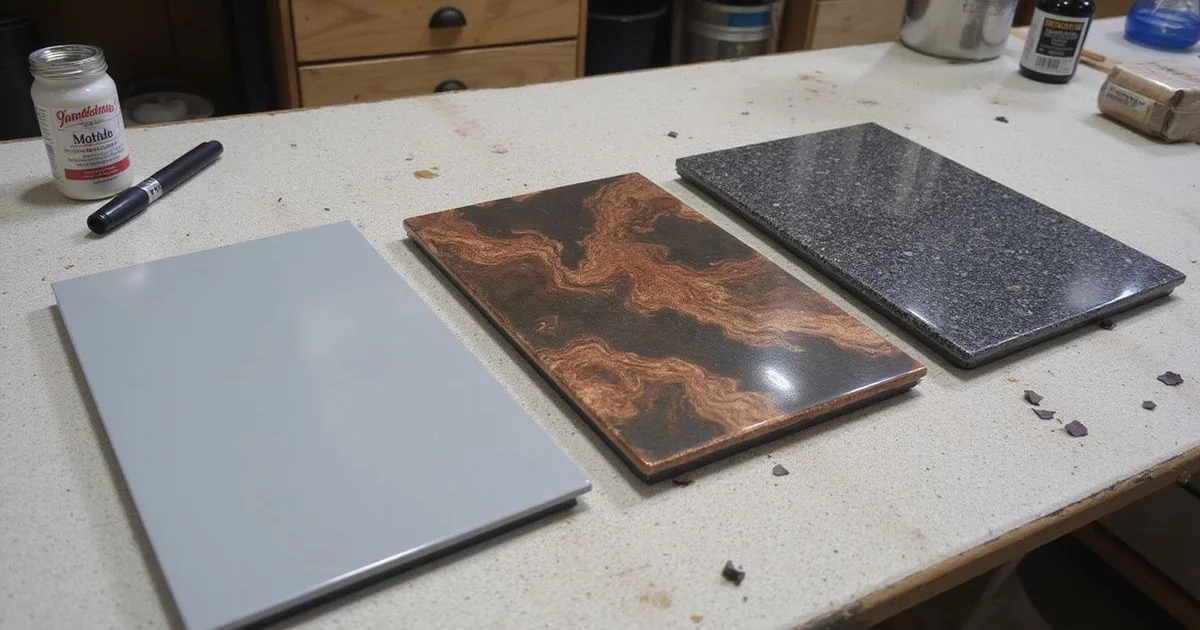
Three Names, Often Used Interchangeably
Walk into a conversation about coated concrete and you will hear epoxy, metallic epoxy, and polyaspartic used as if they were competing brands of the same thing. They are not. Two are resin chemistries and one is a decorative treatment, and knowing which is which changes what you should be paying.
All three fall under epoxy floors as a service, and all three depend far more on preparation than on product selection.
100% Solids Epoxy
The workhorse. A two-part resin that cures by chemical reaction rather than by evaporation, which means the film you apply is the film you keep.
Epoxy builds thickness, bonds hard to properly profiled concrete, and resists chemicals well. It is the base layer in most quality systems because it does the structural work of the coating: adhesion, build, and resistance.
Its limitations are UV sensitivity, which causes ambering over time in sunlit areas, and cure time, which is measured in days rather than hours. It is also relatively brittle compared with newer chemistries, so film thickness and slab preparation matter.
Metallic Epoxy
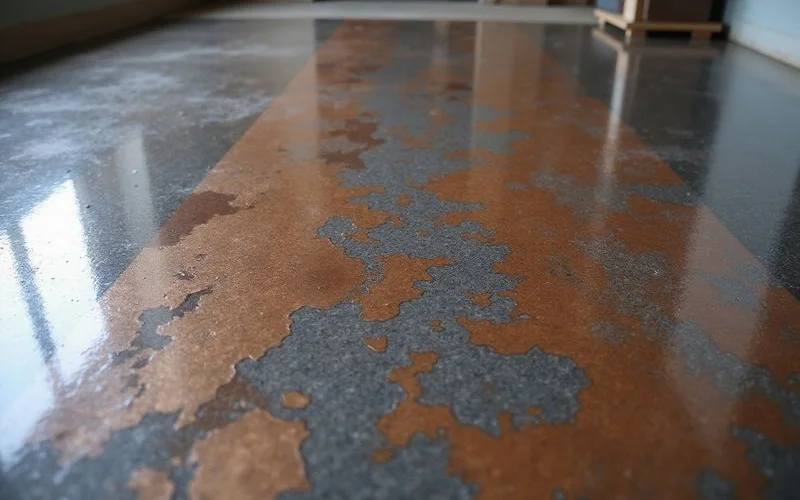
Metallic epoxy is epoxy carrying reflective metallic pigments. While the resin is still wet, the installer manipulates the pigment, producing swirls, pooling, and apparent depth that no other flooring system reproduces.
This is a decorative decision, not a durability one. The base resin is doing the same job it does in a solid-colour system, and the performance depends on the same preparation and film build. Results are also installer-dependent to a degree that is unusual in flooring: two crews using identical product will produce visibly different floors.
We reserve the term for actual metallic epoxy. A swirled look is not stained concrete and it is not polished concrete, and describing it as either misleads buyers about maintenance and about price.
Polyaspartic
An aliphatic polyurea chemistry, usually specified as a topcoat. Its advantages are speed and UV stability: it cures fast enough to allow same-day or next-day return to service in many systems, and it does not amber in sunlight the way epoxy does.
It also handles hot-tyre contact better, which matters in any Texas garage. Applied thin as a topcoat over an epoxy base, it gives the system its wear surface and its resistance.
Its downsides are cost per coat and a short working time. Fast cure means the crew has a narrow window to work in, which rewards experience and punishes improvisation.
How They Are Usually Combined
| Layer | Typical product | Purpose |
|---|---|---|
| Primer | Epoxy or moisture-tolerant primer | Bond and, where needed, moisture mitigation |
| Base | 100% solids epoxy | Build, adhesion, colour or metallic effect |
| Broadcast | Vinyl flake, optional | Texture, grip, appearance |
| Topcoat | Polyaspartic or clear epoxy | Wear surface, UV stability, slip additive |
The part that decides everything
None of these chemistries can compensate for inadequate preparation or unresolved slab moisture. A premium polyaspartic over an unprofiled, untested slab will fail faster than a basic epoxy over a properly ground and tested one.
Choosing Between Them
Choose a solid-colour epoxy with a clear topcoat for workshops, plant rooms, and commercial floors where function leads and downtime is acceptable.
Choose a flake system for garages, where texture, grip, and the ability to hide dust and marks all matter. That is covered in garage floor epoxy and flake coatings.
Choose metallic epoxy where the floor is meant to be looked at: a showroom, a bar, a retail space, a feature area. Go in knowing the result is partly artistic and ask to see the installer’s own work.
Choose a polyaspartic topcoat wherever UV exposure, hot tyres, or fast return to service matter, which in Central Texas garages is most of the time.
What to Ask For in a Quote
Named products for each layer, the total system thickness, the surface profile the slab will be ground to, the moisture testing method, the cure schedule for foot and vehicle traffic, and whether a slip additive is included. A quote that lists only “epoxy floor” and a price is not describing a system.