The Two Things That Decide Whether a Coating Lasts
A coating is only as good as its bond to the slab and the slab’s ability to let it stay bonded. That is it. Product selection matters far less than either.
Both are invisible in a finished floor, and both are the first things cut from a cheap quote. If you are reading about epoxy floors and wondering why quotes differ so much, this is usually where the difference lives.
Mechanical Preparation
Concrete straight out of the form has a smooth, closed surface layer of cement paste, which is the weakest part of the slab. A coating bonded to that layer is bonded to something that can let go.
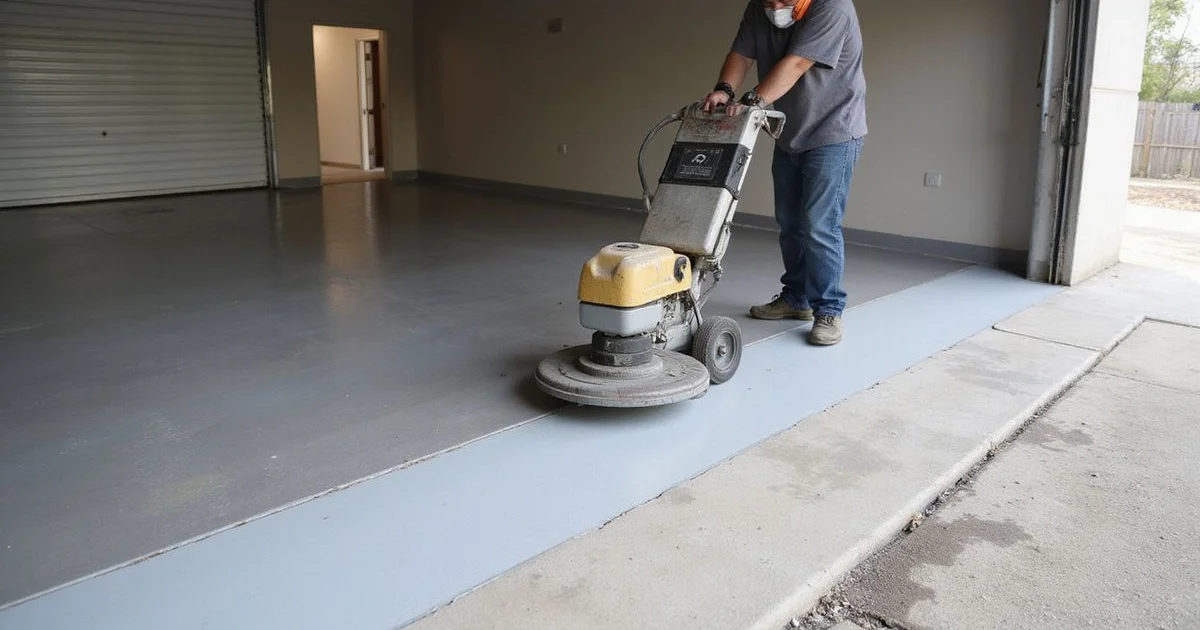
Diamond grinding removes it. It also removes contaminants, curing compounds, existing sealers, adhesive residue, and any previous coating, and it opens the pore structure so the resin can key mechanically into the concrete.
The target is described as a concrete surface profile, and for most coating systems that means something in the CSP 2 to 3 range: noticeably textured, like medium sandpaper, rather than smooth.
Why acid etching is not preparation
Consumer kits recommend etching because it needs no equipment. Acid dissolves some surface paste, and it does not produce a comparable profile, does not remove oils or coatings, and can leave salts behind in the surface that later interfere with the bond. Nearly every failed DIY garage floor we are asked to fix was etched rather than ground.
What Moisture Actually Does
Concrete slabs sit on ground that holds water. Water vapour moves up through the slab continuously, driven by the difference in humidity between the ground and the air above.
Uncoated, that vapour simply leaves the surface and nobody notices. Coated with an impermeable film, it reaches the underside of the coating and cannot escape. Pressure builds. The coating blisters, then delaminates, usually in patches that look random and are not.
Central Texas makes this worse than average. Long dry spells followed by heavy rain drive large seasonal swings in slab moisture, so a floor coated during a dry August can face very different conditions in a wet spring.
How Testing Works
Two methods are standard.
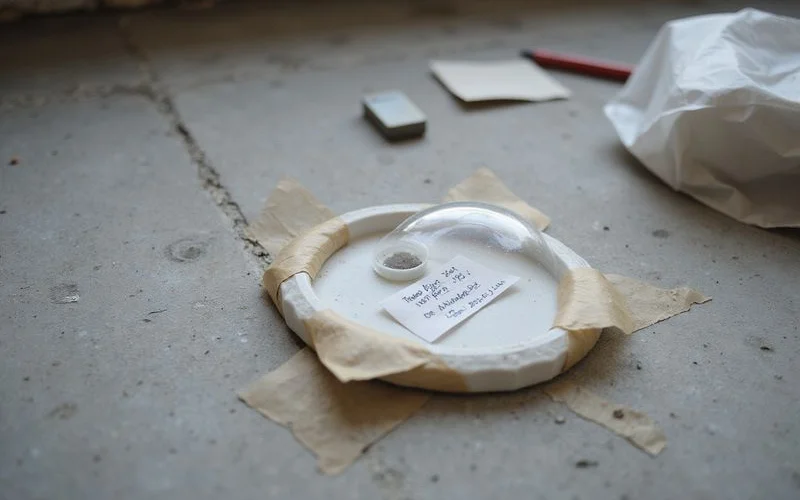
Calcium chloride testing measures how much moisture emerges from the slab surface over a set period, using a pre-weighed dish under a sealed dome. It gives a rate of vapour emission.
Relative humidity probe testing drills into the slab and measures humidity at depth, which many consider the more reliable indicator of what the slab will do over time.
Both require the slab to be at service temperature and conditions, and both take time, which is why they are scheduled ahead of the coating rather than on the morning of it.
A plastic sheet taped down overnight is a rough field check, not a test. It will show you an obvious problem and it will miss a marginal one.
What Happens With a High Reading
The options are straightforward and none of them is optimism.
A moisture mitigation primer is applied first, creating a barrier layer designed to tolerate vapour pressure the finish coat cannot. It adds cost and it works.
A more tolerant system may be specified, choosing chemistry that breathes more than a standard high-build epoxy.
Or the honest recommendation is not to coat. If a slab is actively wet because of a drainage or plumbing issue, the coating is not the problem to solve first.
Repairs That Belong in the Same Stage
With the slab ground and bare, defects are visible and accessible. Pitting and spalling get filled. Control joints get a decision: fill them, honour them, or bridge them, each with consequences. Cracks get assessed for movement, since a coating over a moving crack will split along it.
Doing this work at preparation stage costs a fraction of doing it after a coating has failed over it.
What to Ask For
Ask what profile the slab will be ground to, what moisture testing method will be used and when, what the readings need to be for the quoted system, and what the plan is if they come back high. If the answer to the last question is that it does not usually matter, keep looking. Which coating system then goes on top is covered in epoxy versus metallic epoxy versus polyaspartic.