Care Follows the System, Not the Floor Type
The most common maintenance question is which cleaner to use, and the honest answer is that it depends on what is on your floor, not on the fact that the floor is stained concrete.
A stained concrete floor is really two things working together: colour in the surface of the slab, and a sealer protecting it. Almost everything about day-to-day care is determined by the sealer. A penetrating sealer, an acrylic film, and a polyurethane behave differently, wear differently, and tolerate different products.
That is why we hand over guidance for the system we installed rather than a generic sheet, and why anyone who gives you a universal answer without asking what is on the floor is guessing.
The Daily and Weekly Routine
Grit is the enemy. Sand and dust tracked in from outside act like fine sandpaper under shoes, and traffic paths dull because of abrasion far more often than because of anything anyone spilled.
So the routine is simple:
- Daily or as needed: dust mop, sweep with a soft broom, or vacuum with a hard-floor head. No beater bar.
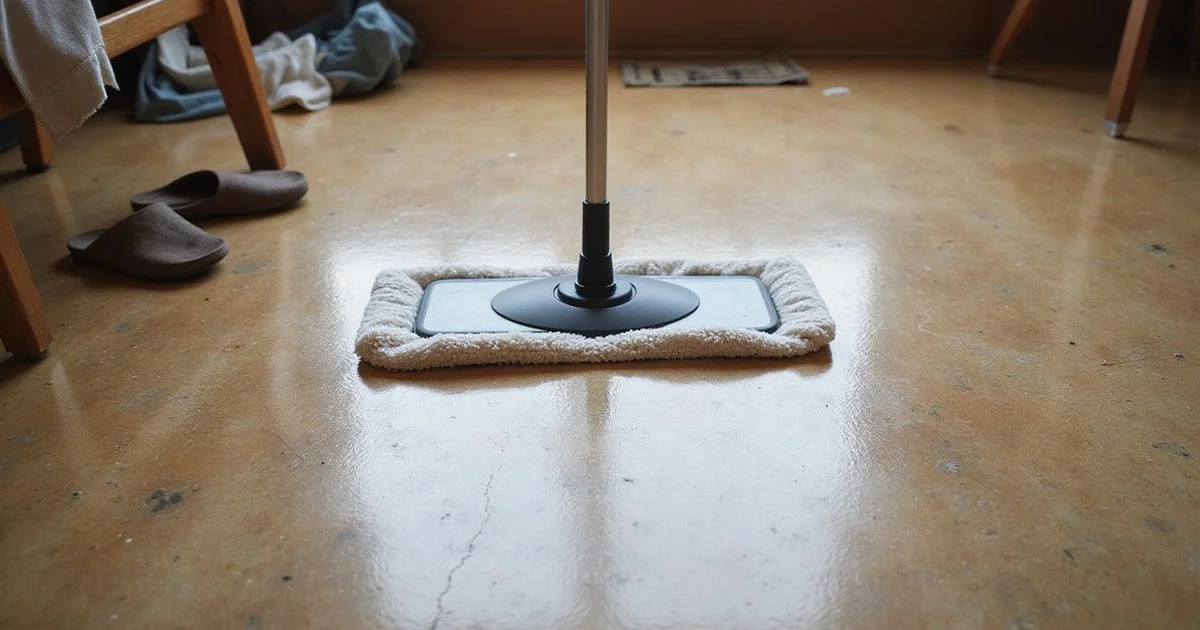
- Weekly: damp mop with a pH-neutral cleaner, wrung out rather than sopping.
- At the door: mats inside and out. This single change does more for a floor’s appearance over five years than any product.
- Under furniture: felt pads on chair and table legs, and lift rather than drag.
What to Keep Off the Floor
Some of the most commonly recommended household cleaners are the worst choices for a sealed decorative floor.
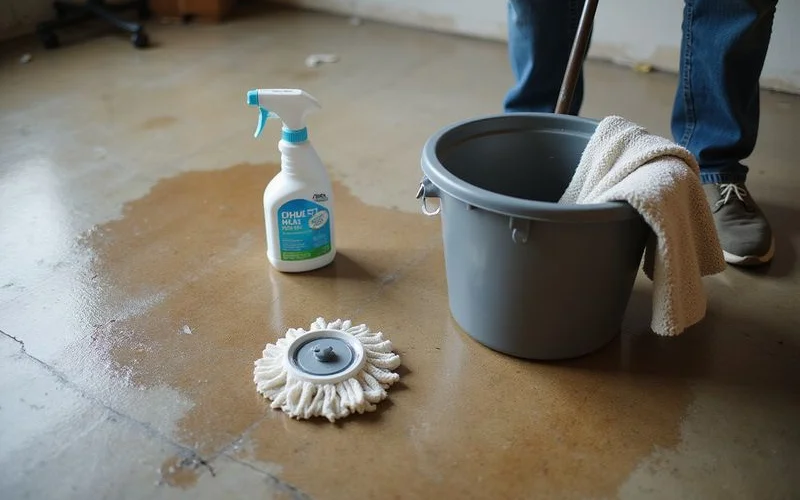
Vinegar and citrus-based cleaners are acidic, and acid attacks both concrete and many sealers. Bleach-heavy products and strong degreasers can dull or discolour a film. Anything labelled as a stripper is designed to lift coatings, which is precisely what you do not want. Abrasive powders and scouring pads scratch the sealer, and once the sheen is scratched the only fix is refinishing rather than cleaning.
The rule of thumb
If a product promises to cut through anything, it will probably cut through your sealer. Neutral, diluted, and boring is what you want.
Spills, Marks, and Realistic Expectations
A well-maintained sealer resists most household spills long enough for you to deal with them. It is protection, not a force field.
Acidic spills are the urgent ones: wine, citrus, cola, and vinegar-based dressings. Oil and grease come next, since they can darken a surface if left. Pet accidents should be dealt with promptly for the same reason.
For a mark that will not wipe away, resist the temptation to escalate to something stronger. Scrubbing with an aggressive product usually turns a stain problem into a sheen problem, and a dull patch is more noticeable than the mark you were removing. Ask before you attack it.
Signals the Sealer Needs Attention
Rather than a date on a calendar, watch the floor for these:
Water no longer beads and instead soaks in and darkens the surface temporarily. Traffic paths look flat compared with the edges of the room. Marks that used to wipe away now need effort. Or the floor simply looks tired in raking light even after cleaning.
Any of those means the protective layer is doing less work than it was. What happens next depends on the system, which is covered in sealing stained concrete, and the options range from a light refresh to a full strip and reseal.
Situations That Need a Different Answer
Pets. Accidents are urgent rather than unpleasant, because urine is both acidic and persistent, and a sealer that has thinned will let it reach the concrete. Claws also mark a gloss finish faster than a matte one, which is worth knowing before you choose a sheen.
Kitchens. Oil spatter travels further than people expect and builds up as a film that dulls the surface gradually rather than staining it obviously. A regular damp mop in the cooking zone deals with it.
Entries and back doors. These are the grit gateways. Mats inside and out, and a shoe habit if you can manage one, will do more for the floor than any product.
Building work. Protect the floor properly during any trade work, and use breathable protection rather than taped-down plastic sheeting, which traps moisture against the surface.
Large plant pots. Standing water underneath them causes a ring of discolouration that can outlast the plant. Use feet and saucers, and move them occasionally.
A Note on Resealing Intervals
We do not publish one. Traffic volume, grit, sunlight, cleaning habits, and the sealer type all change the answer, and a floor in a quiet adult household will go years longer than the same floor with three kids, two dogs, and a back door onto a garden.
Watch the floor. It tells you, and it tells you before the damage becomes expensive.