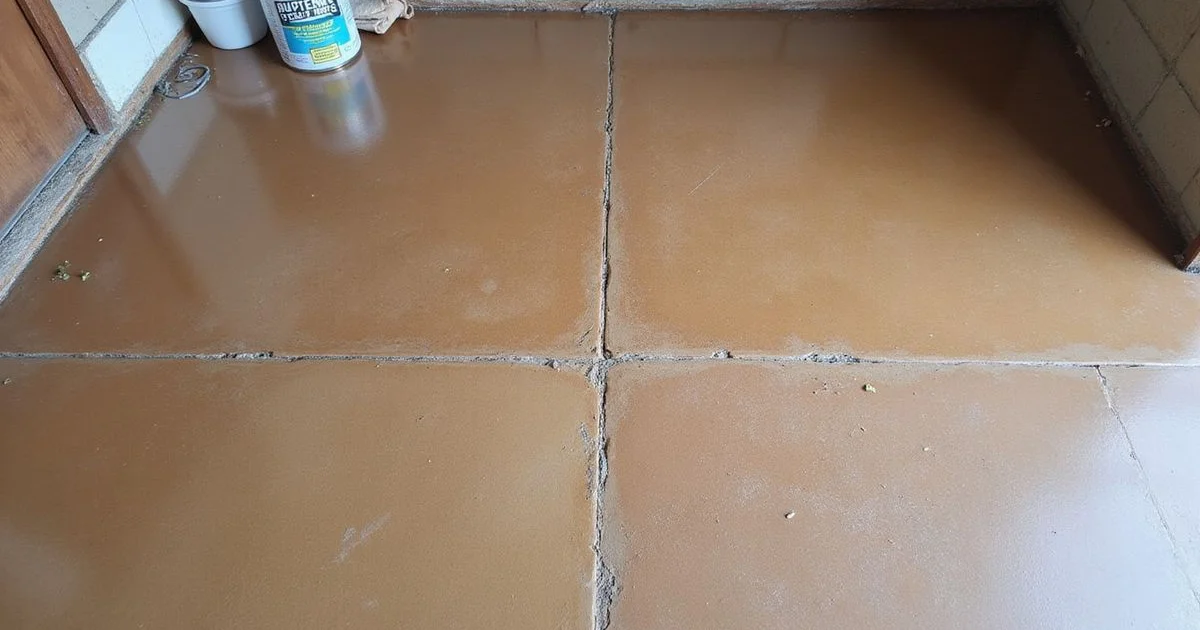
What the Sealer Actually Does
On a stained concrete floor, the colour is in the concrete and the sealer is what stands between that colour and everyday life. It does four jobs at once, and they pull against each other more than people expect.
It protects against staining and abrasion. It determines the sheen, and therefore how deep the colour reads. It changes how the floor feels underfoot and how it behaves when wet. And it sets the maintenance regime you will live with for years.
Choosing a sealer for how a sample looks in a showroom, without considering how the room is used, is the most common way people end up unhappy with a floor whose colour they love.
The Two Families
Penetrating sealers soak into the surface and work from within. There is no film on top, so there is nothing to peel, blister, or wear through in a doorway. They typically leave a natural, low-sheen appearance and are more tolerant of moisture moving up through the slab. What they give up is depth of colour and surface protection against staining.
Film-forming sealers sit on the surface. Acrylics are the common entry point, easy to apply and easy to renew. Polyurethanes are tougher, more chemical-resistant, and considerably harder to strip when the time comes. Films deliver richer colour and higher sheen, and they are the reason a stained floor in a photograph looks so much deeper than the same floor sealed with a penetrating product.
The trade-off is straightforward. Films protect better and wear visibly. Penetrating sealers wear less visibly and protect less.
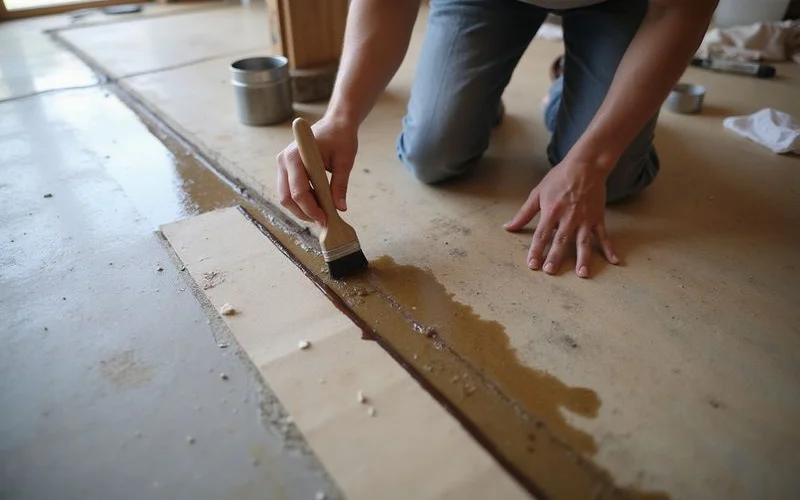
Sheen Is a Practical Decision
Matte, satin, and gloss are not just aesthetic preferences.
Matte finishes hide dust, scuff marks, and minor imperfections better than anything else, and they read as the most natural. They are the forgiving choice for a busy household. Satin gives a little more depth without turning the floor into a mirror, and it is where most living spaces land. Gloss is striking, deepens colour perception significantly, and shows absolutely everything: every footprint, every dust settle, every scratch.
Gloss is also the slipperiest when wet, which matters at entries, in kitchens, and anywhere that connects to outside. Where traction is a concern, we either drop the sheen or specify a slip-resistant additive in the topcoat.
Worth knowing before you choose
Sheen affects perceived colour. The same stain under a matte sealer and a gloss sealer can look like two different colours, with gloss reading noticeably darker and richer. Always view a sample with the sealer you plan to use, not bare.
Compatibility Is Not Optional
Stain, sealer, and maintenance products have to belong to systems that work together. A sealer applied over inadequately neutralised acid stain can fail to bond. A new sealer applied over an unidentified old one can lift it, cloud, or simply refuse to adhere.
This is the reason we run test areas on restoration and recoat work. Establishing what is already on a floor takes half an hour and prevents a failure that takes days to correct.
Wear Patterns and When to Act
Sealers do not wear evenly. They wear where you walk: the path from the back door to the kitchen, the pivot point at the end of a hallway, the arc a chair traces as it is pushed back. Sunlit areas near glass age differently from shaded corners.
The signals that renewal is due are consistent regardless of the product: water stops beading and darkens the surface temporarily, traffic paths look flat next to the room’s edges, marks that used to wipe away start lingering, and the floor looks tired in raking light even when it is clean.
Acting on those signals early is far cheaper than acting late. A sealer refreshed while it is still intact is a light job. A sealer worn through to bare concrete in traffic paths means the colour itself is now exposed, and that is a restoration rather than a maintenance visit.
Why We Will Not Give You a Number
A fixed resealing interval would be easier to publish and it would not be true. A quiet household with mats at the doors and a penetrating sealer may go many years. A family entrance with a film sealer, grit tracked in daily, and a dog will come around far sooner.
So we give you the signals and the care routine instead. Combine this with how to clean stained concrete floors, because cleaning habits affect sealer life more than almost anything else, and the two guides together will tell you when it is time to call someone.