Why There Is No Price Per Square Foot on This Page
You can find a number for stained concrete floors on plenty of websites. It will be quoted without a scope, which makes it decorative rather than useful.
Here is the problem. Two projects of identical size can differ in price by a factor of three, and neither contractor is being dishonest. One is staining a bare, sound, newly poured slab. The other is removing ceramic tile, grinding out thinset, filling forty tack-strip holes, treating a crack, and applying three coats of sealer to a commercial-traffic floor. Publishing an average of those two helps nobody.
So instead of a number, here are the drivers, in roughly the order they move a quote. Take this list to every contractor you talk to, including us, and the comparison becomes possible.
The Seven Cost Drivers
1. Area and layout. Larger open floors cost less per square foot than small cut-up rooms, because edge work, doorways, and transitions are slow. A 1,500 square foot open-plan area is not five times the price of a 300 square foot room.
2. Removal. This is the biggest single variable. Carpet and underlay come up quickly. Ceramic tile with thinset is slow, dusty, and sometimes damages the slab. Vinyl with mastic is the worst of the three because the adhesive has to be fully removed for the stain to penetrate evenly.
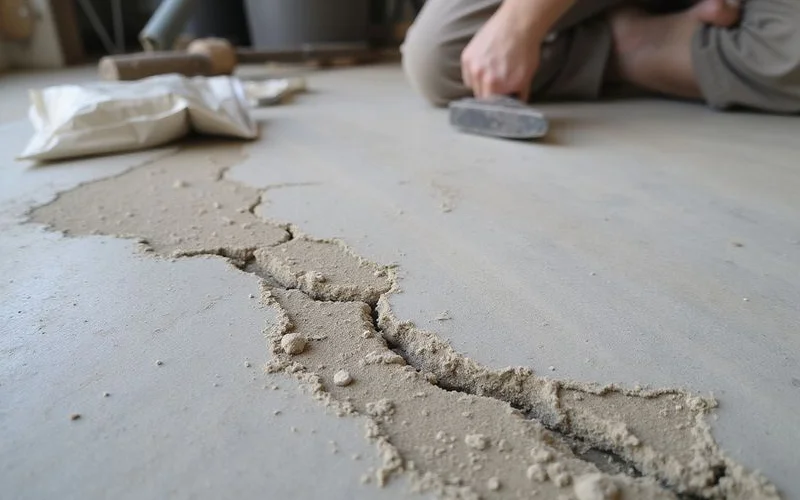
3. Preparation. Mechanical profiling, residue removal, and cleaning. The tighter the slab and the more contaminated the surface, the more passes it needs. This is covered in detail in how stained concrete is prepared and installed, and it is where quotes most often diverge.
4. Repairs. Crack treatment, filling holes, spalled edges, and levelling. Some of this is structural necessity and some is aesthetic preference, and we separate the two in a quote so you can decide.
5. Colour approach. A single reactive stain is the baseline. Layered effects, a reactive base with a dye over it, borders, scoring, or feature work all add labour.
6. Sealer system and coats. Product choice and coat count. Two coats is common domestically, more in commercial settings. Every coat is another visit to the floor and another drying period.
7. Access, logistics, and minimums. Stairs, limited parking, restricted work hours, occupied buildings, and furniture handling all cost time. Small jobs carry a minimum charge because setup does not scale down.
Where the Cheap Quote Went
When a quote comes in dramatically below the others, it is worth working out which of those seven it has left out. In our experience it is nearly always preparation, sealer coats, or both.
The floor will look correct at handover. The difference shows up as blotchy colour where residue survived, a sealer that wears through in traffic paths within a year, or a finish that peels where it never properly bonded. At that point the remedy is a restoration, which costs considerably more than the difference you saved.
Four questions that make quotes comparable
- What removal is included, and what happens if you find something underneath?
- Are you mechanically grinding, and how many passes?
- How many sealer coats are priced, and which product?
- What is specifically excluded, and is there a minimum charge?
How We Handle Cost Evidence
When we share cost data from our own projects, we date it, describe the scope it covered, and state what was excluded. A handful of jobs is company data, not an Austin market average, and we will not describe it as one.
That matters because “average cost” figures circulate widely, usually sourced from aggregators covering the whole country, and they tell you nothing about your slab, your removal requirement, or your sealer specification.
Ways to Genuinely Reduce Cost
Some savings are real and some are false economies. The real ones:
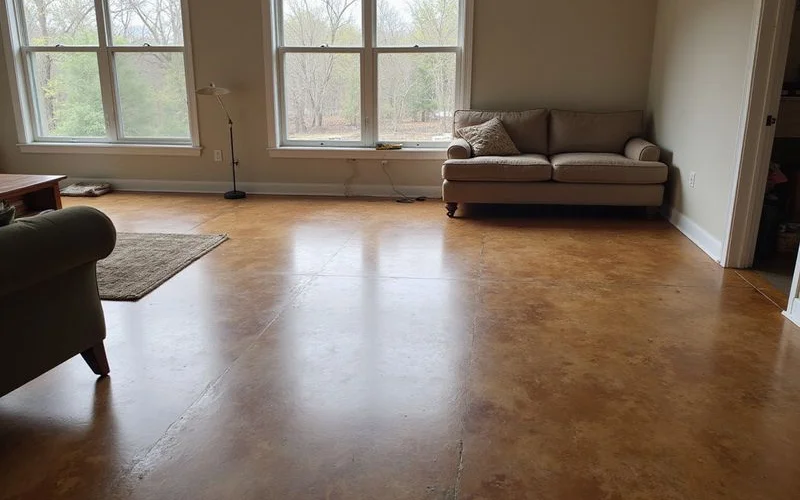
Clear the space yourself and have it completely empty before the crew arrives. Remove the old covering yourself if you are able and willing, though be honest about whether you will also remove the adhesive properly. Do the whole area at once rather than in phases, since mobilisation is charged each time. Choose a straightforward single-colour treatment rather than layered feature work. And accept a matte or satin sheen rather than a high-gloss build that needs additional coats.
The false economies are skipping preparation, dropping a sealer coat, and choosing the contractor who did not ask any questions before quoting.
What to Do Next
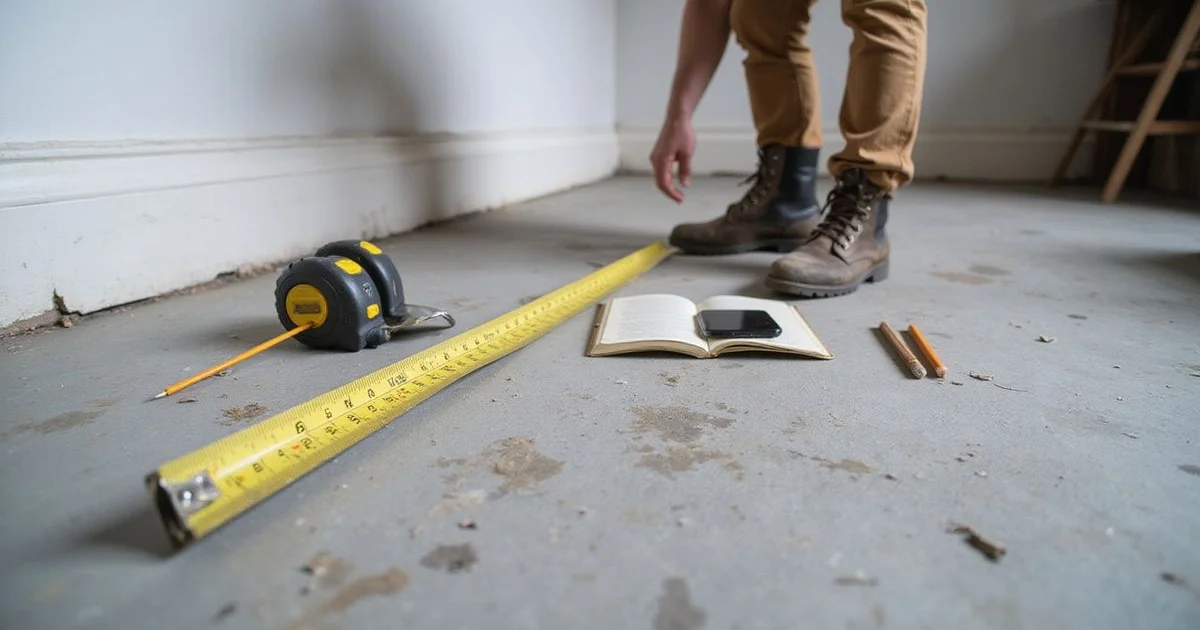
Measure the area, photograph the existing floor and any visible cracking, and note what is under the current covering if you know. Then get quotes that answer the four questions above in writing. Ours will, and it will include the exclusions and any minimum charge on the same page as the number.