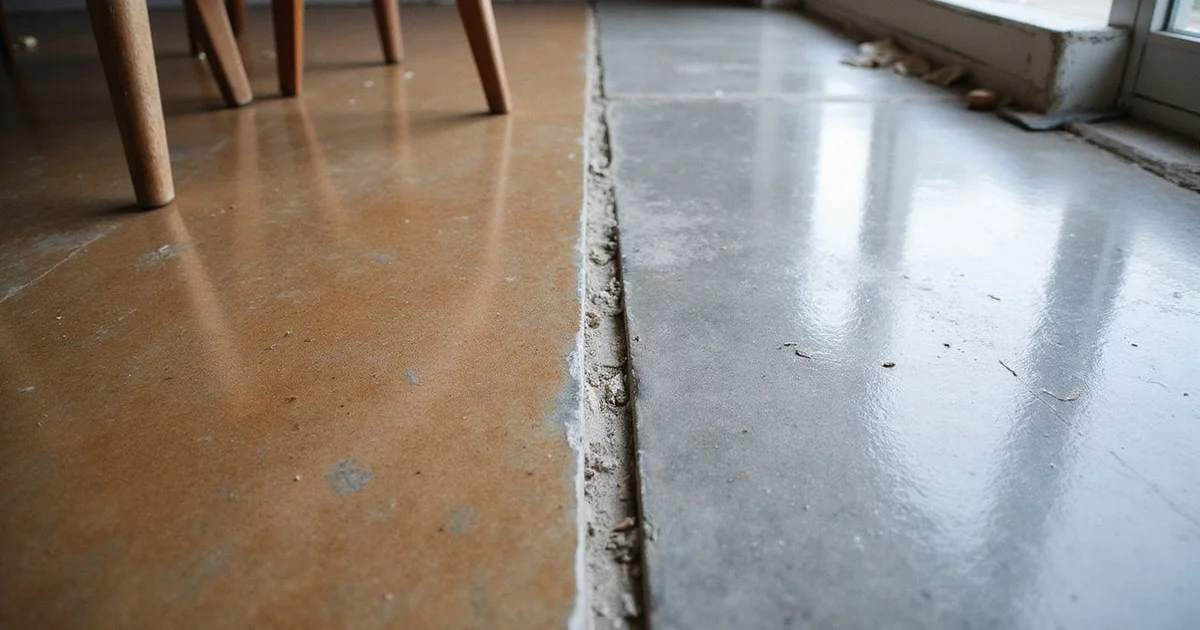
Colour and Surface Are Two Separate Decisions
The confusion here is understandable, because both processes end with a concrete floor that looks deliberate and neither involves laying a covering. But they do different things.
Staining is about colour. It puts colour into the surface of the slab and then protects it with a sealer. It does not change how flat, smooth, or reflective the concrete is, beyond what the sealer contributes.
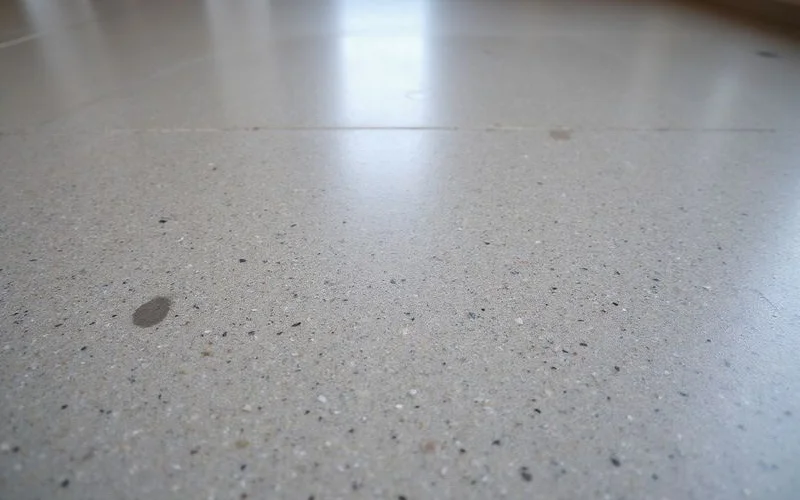
Polishing is about the surface. It mechanically refines the concrete through progressive diamond grits, hardens it with a densifier, and produces sheen from the concrete itself. It does not add colour.
Because they address different properties, they are not mutually exclusive. A stained-and-polished floor is a legitimate and common specification, and it is often the answer when someone cannot decide between the two.
How They Compare in Practice
| Stained concrete | Polished concrete | |
|---|---|---|
| What changes | Colour of the surface | Texture, flatness, and sheen |
| Where the sheen comes from | The sealer | The concrete itself |
| Appearance | Translucent, mottled, colour-led | Grey to exposed aggregate, light-led |
| Maintenance item | The sealer | None topical, burnish to refresh |
| Aggregate | Not exposed | Exposed by choice of cut depth |
| Typical settings | Homes, hospitality, retail | Retail, commercial, open-plan homes |
What Polishing Brings That Staining Does Not
Polishing exposes the slab’s own material. Depending on how deep the first cut goes, you get a cream finish with almost no aggregate, a salt-and-pepper look with fine stone showing, or full aggregate exposure that reads close to terrazzo. That decision is unavailable on a stained floor, where the surface stays as it was.
It also removes the topical film from the maintenance equation entirely. There is nothing to peel, blister, or wear through in a doorway, and refreshing a dull traffic path is a burnish rather than a recoat. More detail on that in what polished concrete is.
What polishing cannot do is give you warm, translucent, variegated colour. Dye adds colour, and it looks different from reactive stain because the surface beneath it has been refined rather than left as-poured.
What Staining Brings That Polishing Does Not
Character, mostly. A reactive stained floor has movement and depth that a polished grey floor does not, and it can be warm in a way polished concrete rarely is. It is also generally the less disruptive process, with fewer passes across the floor and less equipment.
Staining is more forgiving of slabs that would not polish well: soft concrete, uneven surfaces, heavily patched floors, and slabs where the aggregate sits too deep to expose usefully. Whether your particular floor qualifies is covered in can you stain existing concrete.
How to tell what you are being quoted
Ask whether the gloss comes from grinding or from a coating. If the answer mentions a sealer, you are being quoted a sealed floor, which may be a stained-and-sealed floor or a grind-and-seal. Both are legitimate. Neither is mechanically polished concrete, and they should not carry a polished concrete price.
Combining Them
A stained-and-polished floor is produced by introducing colour during the polishing sequence, typically as dye at a particular grit stage, then completing the polish. The result is colour with no topical film, which is about as low-maintenance as a decorative concrete floor gets.
It costs more than either process alone and it needs to be planned from the start, because retro-fitting colour to a completed polished floor is not straightforward.
Choosing
Choose staining if colour and warmth lead your decision, if the slab is not a strong polishing candidate, or if you want the finish that most disguises its own newness.
Choose polishing if you want a refined, reflective, low-maintenance surface, if the slab is sound and flat enough to take it, and if grey with visible aggregate is a look you actively want rather than one you are accepting.
Choose both if you want colour without a maintenance film and the budget allows for a longer process.