Different Systems, Not Different Grades
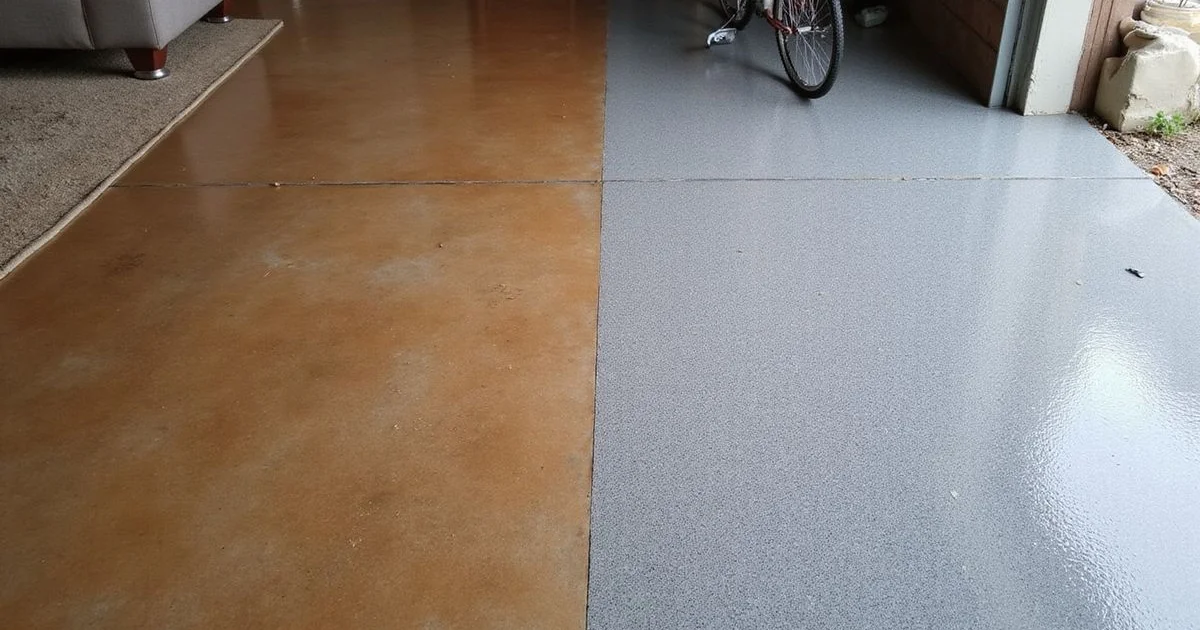
The first thing to understand is that these are not two points on the same quality scale. They are different systems doing different jobs.
A stained concrete floor puts colour into the surface of the slab and protects it with a sealer. The concrete remains the floor. An epoxy floor is a coating system applied on top of the slab, building measurable thickness and creating a new surface that carries all the wear.
That difference drives everything else: how they look, where they belong, what preparation they need, and how they fail when they fail.
Side by Side
| Stained concrete | Epoxy coating | |
|---|---|---|
| What it is | Colour in the slab, sealed | A coating system over the slab |
| Appearance | Translucent, mottled, natural | Solid colour, flake, or metallic swirl |
| Typical settings | Living areas, retail, hospitality | Garages, workshops, commercial, feature areas |
| Chemical resistance | Moderate, depends on sealer | High |
| Impact and vehicle traffic | Fine for foot traffic | Built for it |
| Preparation demands | Profiling, residue removal | Diamond grinding plus moisture testing |
| Moisture sensitivity | Lower, especially with penetrating sealers | High, a leading cause of failure |
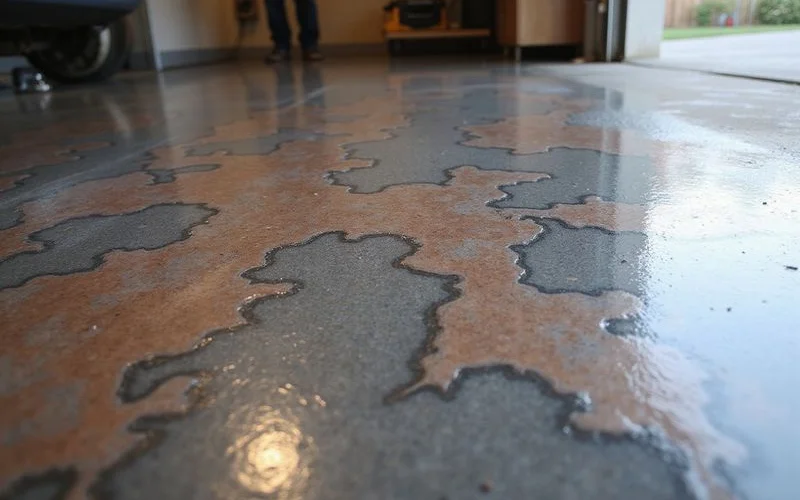
| Failure mode | Sealer wears in traffic paths | Coating delaminates or peels |
| Renewal | Reseal | Recoat, sometimes full removal first |
Where Each One Genuinely Belongs
Stained concrete belongs where the floor is part of the living space. Kitchens, open-plan areas, hallways, entries, cafes, shops, and offices. It reads as a natural material, it ages in a way that is easy to live with, and its maintenance is a sealer rather than a system.
Epoxy belongs where the floor is working equipment. Garages that see hot tyres and dropped tools, workshops with solvents and oils, commercial kitchens, plant rooms, and anywhere that gets hosed down. Metallic epoxy is the exception to that framing: it is a decorative choice used in feature areas, bars, retail floors, and showrooms because it produces movement no other system can.
The mistake we correct most often
Epoxy specified for a living area because someone described it as “more durable”. It is more chemically resistant, and in a lounge room that resistance is defending against nothing while the coating’s own failure modes, particularly moisture-driven delamination, remain fully in play.
Preparation and Moisture Decide Both
Both systems demand real surface preparation, and neither survives a shortcut. Epoxy demands more, because a coating relies entirely on its bond.
Moisture is where they genuinely diverge. Water vapour moving up through a slab will push an impermeable coating off the concrete, which is why epoxy work starts with moisture testing. A stained floor with a penetrating sealer is far more tolerant of the same conditions, because the system breathes.
In Central Texas, where slabs swing between saturated and dry across a year, that tolerance is worth weighing. It does not rule epoxy out, and it does mean epoxy work should begin with a test rather than a colour chart.
Comparing Cost Honestly
Quotes for these two are frequently compared unfairly. A stain-and-seal quote covering preparation, one reactive colour, and two sealer coats is a different scope from a flake epoxy build covering diamond grinding, moisture testing, primer, base coat, broadcast, and clear topcoat.
Compare what each includes: preparation method, product system, coat count, testing, and exclusions. Then compare against what the room actually needs. Paying for chemical resistance in a bedroom is as wasteful as skimping on preparation in a workshop. If staining is the side you are leaning toward, what it costs to stain concrete floors in Austin itemises the same scope questions from that direction.
When the Answer Is Both
Plenty of properties end up with both, and that is usually the right outcome. Stained or polished concrete inside where the floor is part of the room, and a flake or polyaspartic system in the garage where the floor is a working surface.
If your question is really about the garage, read garage floor epoxy and flake coatings. If it is about the living area, the staining guides will serve you better.