The Honest Version
Stained concrete is genuinely excellent in the right room and genuinely wrong in others. Sales pages tend to cover the first half. This one covers both, because the decision is easier when you know what you are accepting.
If you already know you want it and just need the detail on process and scope, stained concrete floors sets that out. If you are still weighing it up, read on.
What Stained Concrete Does Well
It lasts. There is no wear layer to delaminate, no seams to open, and no planks to cup. The colour is in the slab. With a maintained sealer, the floor’s working life is measured in decades rather than years.
It is genuinely low maintenance. Sweep or dust mop, damp mop with a neutral cleaner, and deal with spills. There is no grout to scrub, no timber to re-coat, and nothing that holds dust the way carpet does.
It handles Central Texas conditions. Concrete does not care about humidity swings the way timber does, and it does not host dust mites.
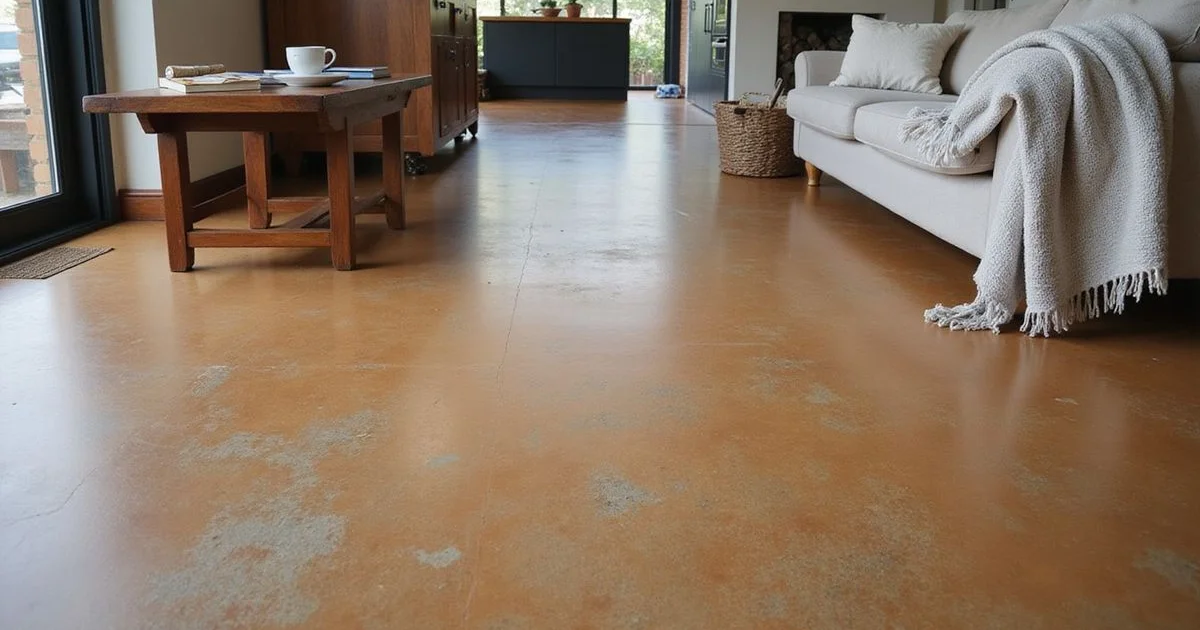
It looks like nothing else. Translucent, variegated colour with movement across the room is a look that manufactured flooring imitates and does not achieve.
It is often the most economical way to finish a slab you already own, since you are not buying and installing a covering.
What You Are Accepting
It is hard. Dropped glassware breaks. Standing at a kitchen bench for an hour feels different from standing on timber. Rugs and anti-fatigue mats solve this in practice, and they are part of the plan rather than an admission of failure.
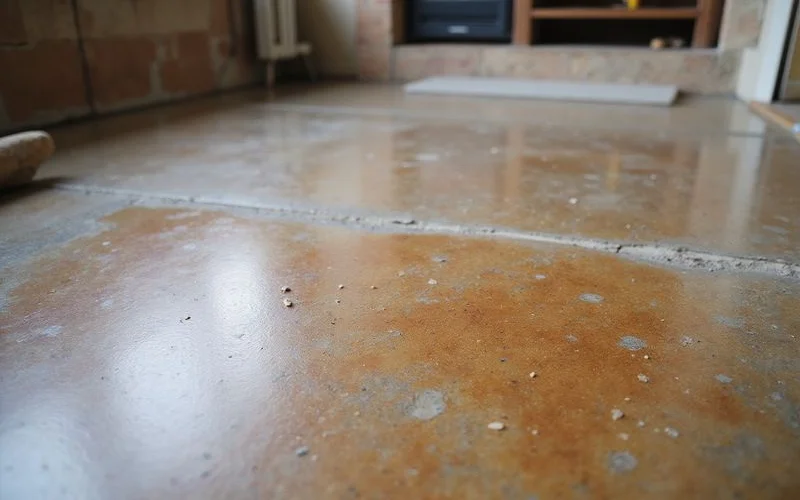
It shows the slab. Saw cuts, patches, trenches, and the shadow line where a wall once stood will all read through the colour. This is character on a floor that suits it and a disappointment on a floor where you expected calm.
Colour is a range, not a specification. Reactive stain reacts with your particular concrete. Two floors, same product, different results. Water-based products narrow that, and no honest contractor will promise an exact match.
It reflects sound. Hard floors and hard walls together make a room live. Soft furnishings fix it; nothing about the floor does.
The sealer is the maintenance item. Not the colour, the sealer. It wears in traffic paths and eventually needs attention, and how soon depends on how the floor is treated.
The question that predicts satisfaction
“Do I want a floor with visible history, or a floor that looks new?” People who answer the first way almost always love stained concrete. People who answer the second are better served by an overlay or another material, and there is nothing wrong with that answer.
Where It Fits Best
Open-plan living areas, kitchens, entries, hallways, and anywhere with good natural light suit stained concrete well. So do commercial spaces where the floor is meant to look deliberate and take traffic without a maintenance programme.
It is a harder fit in bedrooms, where people often want softness; in small dark rooms, where the movement in the colour has no light to play with; and in any space where you need acoustic softness.
Where Another Finish Wins
If you need durability against chemicals, vehicles, and impact, that is an epoxy conversation, covered in stained concrete versus epoxy floors.
If you want a refined, reflective surface without a topical film, polished concrete is the better route, and it can be combined with colour.
If the slab is too damaged or too patched for staining to look right, an overlay gives you a fresh canvas that can then be coloured.
And if you need cushioning, warmth, or acoustic absorption as a priority, none of the concrete options are the honest answer.
Deciding
Go and stand on a real stained floor, in a real room, for longer than you think you need to. Photographs flatter this material enormously, and they cannot tell you how it feels to walk on or how much variation you are actually comfortable with.
Then look hard at your own slab. What it is, what it has been through, and how much of that history you are willing to see is the real decision. Everything else is product selection.