The Four Stages That Make Up the Schedule
People usually ask how many days the job takes. The more useful answer separates the schedule into four parts, because only one of them involves anybody being in your house with equipment.
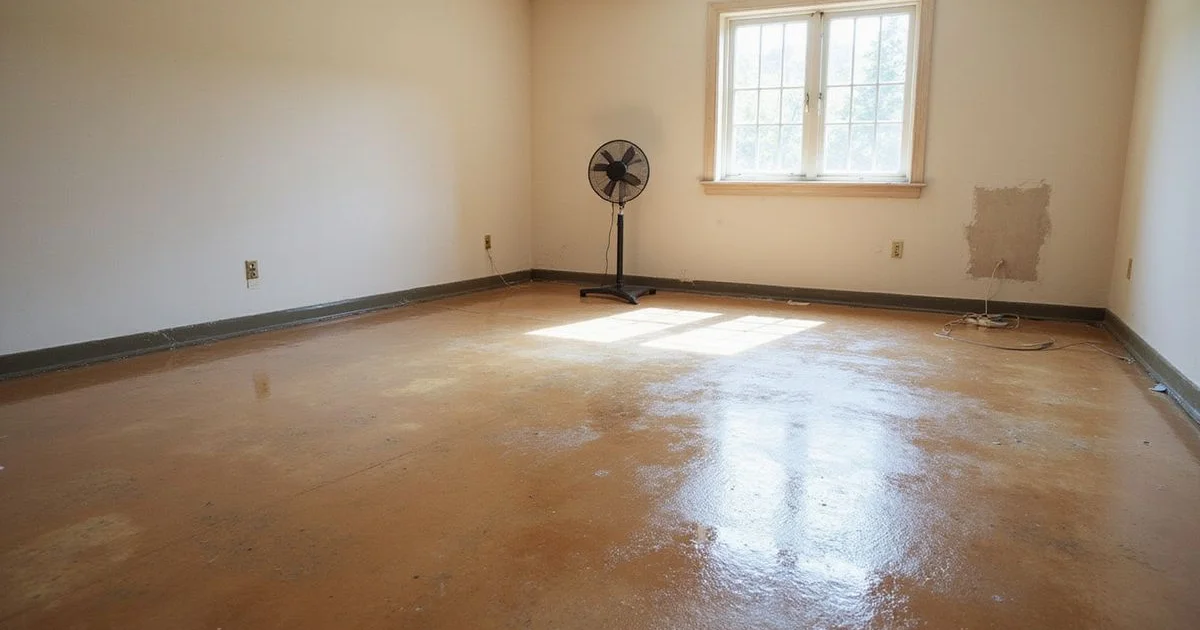
A stained concrete project on the way to a finished stained concrete floor runs through removal, preparation, colour, and sealing, and then it cures. Active work is often the shortest portion. Waiting is the rest.
Stage One: Removal and Preparation
This is the least predictable stage and the one that most often moves a completion date.
Pulling up carpet is quick. Removing ceramic tile and grinding back thinset is not. Discovering a second adhesive layer under the first, or a patched trench nobody knew about, adds work that could not have been quoted in advance because it was not visible.
In a straightforward room with carpet over a sound slab, removal and profiling can be a day. In a tiled kitchen and living area with mastic underneath, it can be several. We give a realistic range in the quote and tell you as soon as anything on site changes it.
Stage Two: Colour
Colour application is comparatively fast, and it is the stage people imagine when they think about the job.
Reactive acid stain goes on and then needs time to react, after which it is neutralised and rinsed, then the floor has to dry properly before sealing. That drying step is not optional and it is weather-sensitive. Water-based stains and dyes dry faster but still need the slab to reach the right condition before anything goes over them.
If a layered effect is specified, with a reactive base and a dye over it, add a cycle.
Stage Three: Sealing
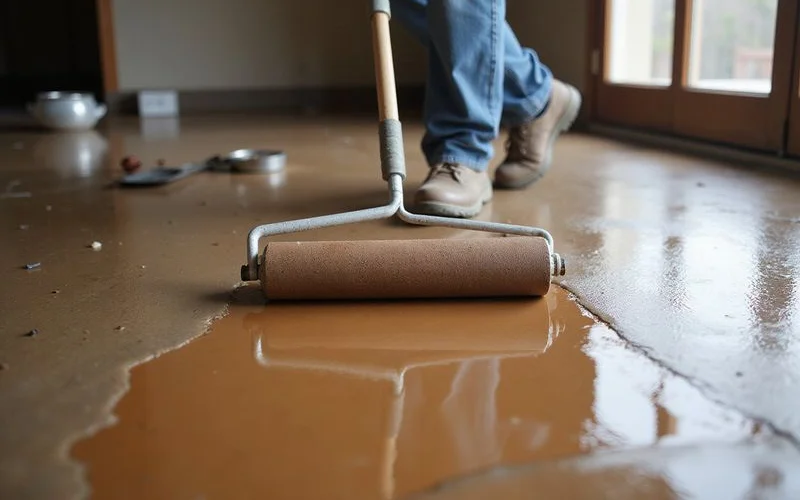
Sealer goes on in coats, with drying time between each. Two coats is common, more in high-traffic or commercial settings. Each coat adds a day in practical terms, because you cannot walk the floor to apply the next one until the previous has set.
Humidity is the variable here, and Central Texas provides plenty of it. A humid week stretches dry times noticeably, and forcing the next coat on early produces a finish that stays soft or clouds.
The most common scheduling mistake
Booking furniture delivery or a trades handover for the day after the last sealer coat. Light foot traffic and full use are different milestones, sometimes by several days. Ask for both dates and plan against the later one.
Stage Four: Curing and Return to Use
Sealers set, then they cure, and those are not the same thing. A set sealer takes light foot traffic. A cured sealer takes furniture, rugs, rolling loads, and cleaning.
Rugs are worth a specific mention: putting a rug down over a sealer that has not fully cured can trap solvent and mark the floor beneath it, and that mark does not lift. So can taping protective sheeting down too early.
We give you both dates when the job starts, and we would rather you wait an extra day than mark a floor that was nearly there.
What Changes Your Schedule
| Factor | Effect on schedule |
|---|---|
| Tile removal versus carpet | Adds days for grinding and repair |
| Unexpected adhesive or repairs | Adds days, discovered during removal |
| High humidity | Extends every drying step |
| Additional sealer coats | One extra day per coat, typically |
| Multiple rooms or levels | More setup, edge work, and sequencing |
| Occupied space | Slower, with access windows to work around |
Planning Around It
Clear the area completely before the crew arrives, including wardrobes and anything stored in the room, because everything gets moved eventually and moving it twice costs you time. Arrange somewhere for pets that keeps them well clear of wet product. Plan for ventilation. And if the job covers the route to a bedroom or a bathroom, work out the access sequence with us before day one rather than on day three.
For the detail on what each stage actually involves, read how stained concrete is prepared and installed. If you are still deciding between finishes, the timeline for polishing or a coating system is different again, and worth comparing before you book anything.