Colour on Concrete Works Differently
Choosing a colour for a stained concrete floor is not like choosing paint. Paint covers. Stain colours what is already there and stays translucent, which means the finished floor is a combination of the product and your slab rather than the product alone.
This is the appeal for most people. It is also the reason the conversation has to start with expectations rather than with a colour chart.
The Palettes You Are Actually Choosing Between
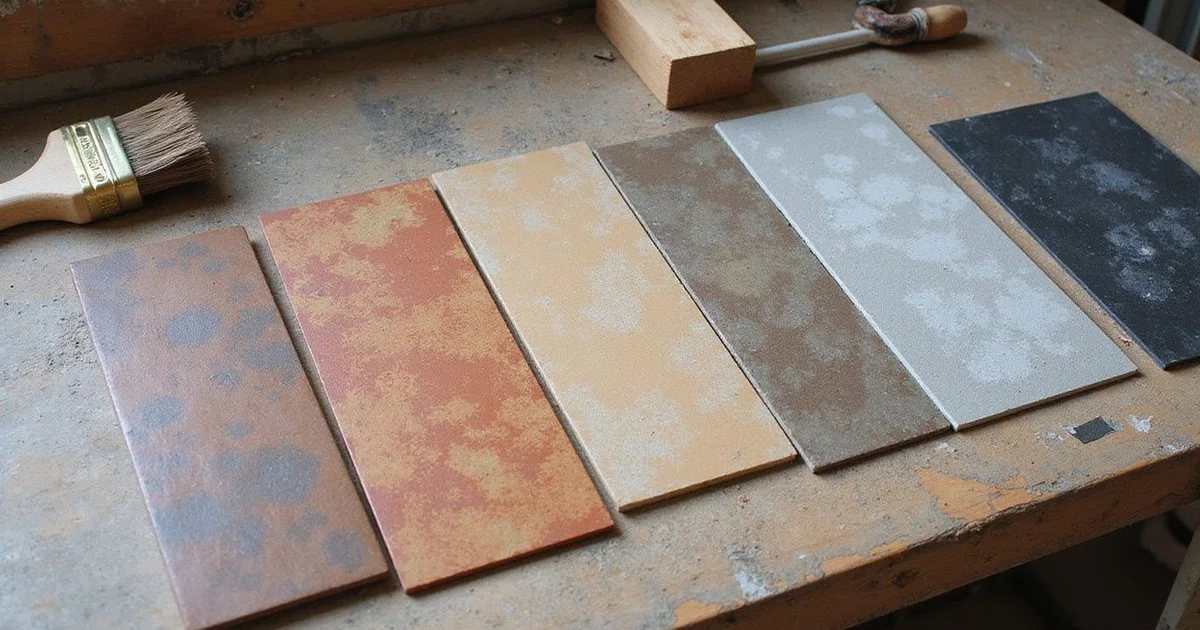
Reactive acid stains produce earthen tones: tans, ambers, browns, warm reds, and greens, plus greys and near-blacks. The colours come from metallic salts reacting with lime in the concrete, so the palette is limited by chemistry rather than by pigment availability. The results are translucent, mottled, and variable across a room, with movement that looks geological rather than manufactured.
Water-based stains carry pigment rather than reacting, which opens the palette considerably, including cooler and more contemporary tones that reactive products cannot reach. The result is more consistent, though still affected by how absorbent different parts of the slab are.
Dyes give the strongest, most saturated colour and the most uniform coverage, and they are often layered over a reactive base to add depth while keeping some of the natural movement.
For a full comparison of how the two main approaches behave, read acid stain versus water-based concrete stain.
Mottling Is the Point, Not a Defect
The single most important expectation to set is variation.
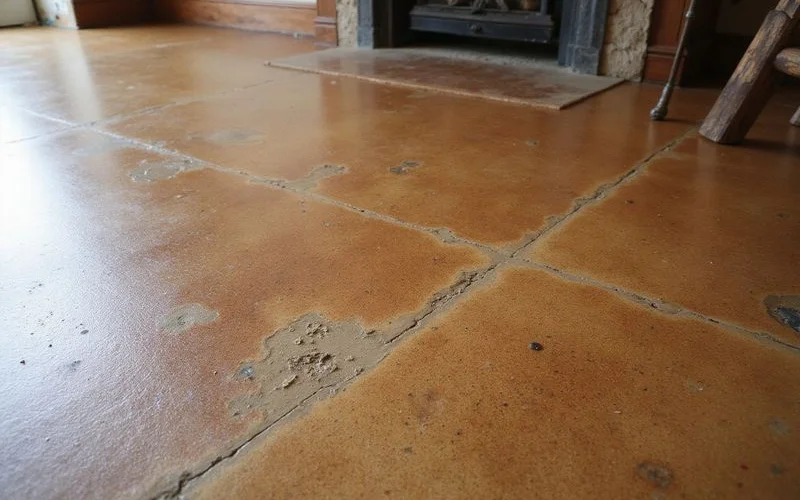
A reactive stained floor is not one colour. It is a range, with lighter and darker areas, subtle cloud patterns where the concrete’s chemistry varied, and often a visible difference where the slab was finished differently or repaired. People who love stained concrete love exactly this. People who wanted a uniform floor are disappointed, and they were usually shown a single close-up photograph rather than a whole room.
The slab’s history shows too. Saw cuts, patches, old trenches, and the darker line where a wall once stood will all read differently. That is honest character on a floor that suits it, and a problem in a room where you wanted calm uniformity. Where uniformity matters more, an overlay gives a fresh, even canvas that takes colour far more predictably.
Ask for a room, not a swatch
A four-inch sample shows the colour. It cannot show the variation, and variation is what you actually live with. Ask to see whole floors, in different light, before you commit.
Sheen Changes Everything You Just Chose
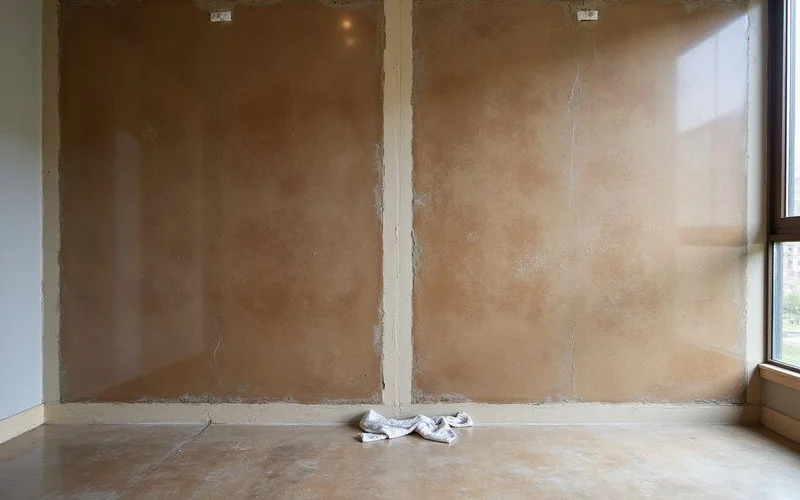
The sealer sheen alters perceived colour more than most people anticipate. The same stain under a gloss finish looks deeper, richer, and often several shades darker than under a matte one. It also reflects more light, which changes the whole room.
| Sheen | Colour effect | Practical effect |
|---|---|---|
| Matte | Softest, lightest reading | Hides dust and scuffs best, most natural |
| Satin | Moderate depth | The usual choice for living spaces |
| Gloss | Deepest, richest reading | Shows everything, most slippery when wet |
Choose the sheen at the same time as the colour, never afterwards, and view samples sealed rather than bare.
How to Choose Well
Look at the room’s light across a full day, because north-facing rooms and west-facing ones will treat the same floor very differently in the afternoon. Consider what the floor sits next to: cabinetry, timber, stone, and wall colour all interact with a translucent surface.
Then test on your own slab. A test area in the actual room, in the actual light, with the actual sealer, is the only thing that settles a colour decision honestly. It costs very little and it is the difference between choosing a floor and hoping for one.
And if what you actually want is an exact, uniform, repeatable colour, say so early. That is a legitimate preference, and it points toward a different product rather than toward a disappointing version of this one.