Outdoor Is a Different Specification
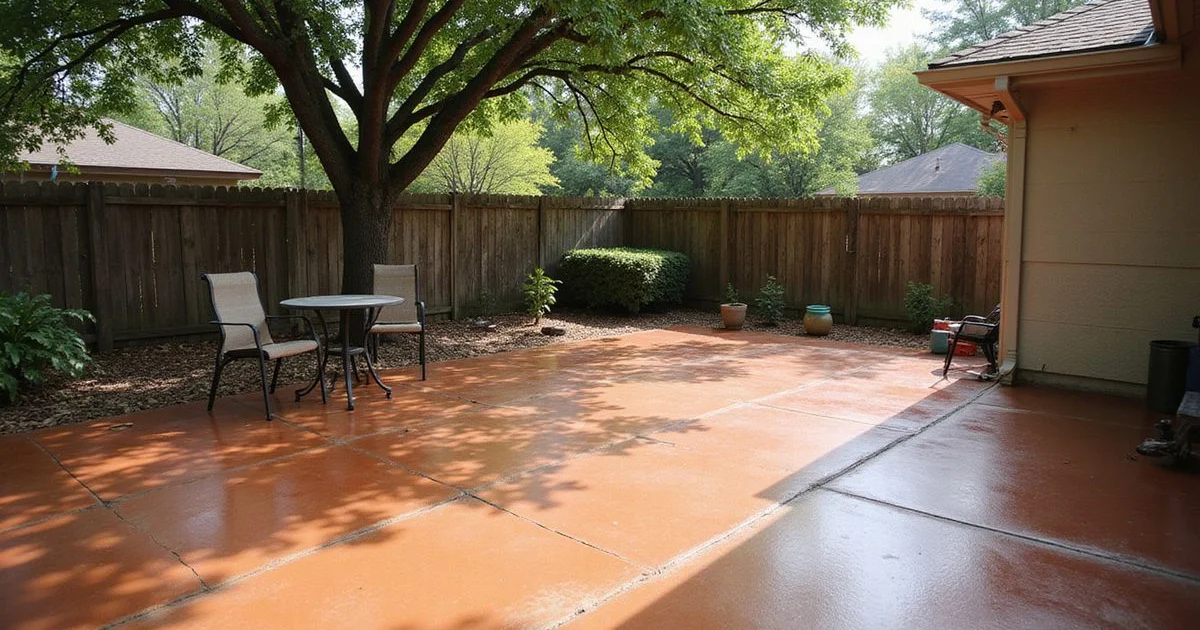
An interior stained floor deals with furniture and foot traffic. A patio deals with months of direct sun, driving rain, thermal cycling, standing water, leaf litter, barbecue grease, and bare feet.
The same product family works outdoors, and the specification around it changes: different sealers, different texture priorities, and different maintenance expectations. This guide covers whether a stained patio suits your situation. The service scope itself is on the patio resurfacing page.
Is Your Patio a Candidate?
The slab needs to be sound. Surface weathering, discolouration, light spalling, and a dated broom finish are all workable. Settlement, active cracking, and structural failure are not, and staining over them simply colours the problem.
Drainage needs to work. Water that pools sits on any surface longer than it should, accelerates weathering, encourages organic growth, and finds its way into anything that will take it. If falls are wrong, that gets addressed before a decorative finish, not after.
Exposure needs considering. A fully exposed west-facing slab and a shaded north-facing one are different projects even at the same address, and the colour and texture decisions follow from that rather than from a chart.
Colour Outdoors
Two things change how colour works outside.
The first is heat. Darker colours absorb noticeably more solar energy, and in an Austin summer that is the difference between a patio you use barefoot and one you do not. This is covered in detail in keeping outdoor concrete cool and slip-resistant.
The second is UV. Constant sunlight works on both the colour and the sealer, and outdoor finishes soften over years in a way interior floors do not. Reactive stains hold up well because the colour is chemically bonded into the concrete. Pigmented products are more exposed to UV degradation.
Neither is a reason to avoid an exterior stained patio. Both are reasons to choose with the exposure in mind rather than picking the shade you liked in a living room photograph.
Texture and Traction
Outdoors, texture is a safety specification.
A smooth, sealed exterior surface is slick when wet, and rain, hose water, and pool splash all guarantee it will be. Textured finishes, whether knockdown, broom, or a cool-deck style, give grip and break up the continuous hot surface at the same time.
Slip-resistant additives broadcast into the sealer take this further, and around steps, coping, and anywhere with a change of level we specify them as a matter of course.
The most common regret
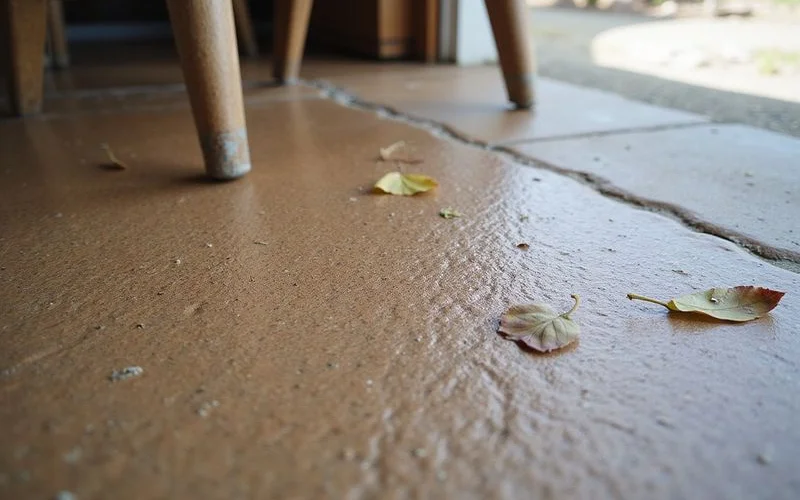
A glossy exterior sealer chosen because it made the colour look deep and rich in the sample. It does exactly that, and it also makes the surface slippery and shows every leaf mark. Outdoors, matte and textured ages better in every sense.
Sealers for Outdoor Life
Exterior sealers are a separate product class. UV stability is the main requirement, since some interior products yellow badly outdoors, and film-forming sealers that trap moisture can cloud from underneath.
Penetrating silane-siloxane sealers work within the surface rather than forming a film, which suits exposed patios and reduces the risk of trapped-moisture problems. Decorative film sealers give more colour depth and demand more maintenance in return.
Whichever is specified, plan on renewal. Exterior sealers work harder and come up sooner than interior ones, and that is the cost of being outside in Texas rather than a defect.
Pool Surrounds Deserve Their Own Thinking
A pool deck is the hardest exterior case, because everything that matters is amplified.
It is wet constantly, so traction stops being a preference and becomes the governing requirement. It is walked on barefoot, so surface temperature matters more than anywhere else on the property. It takes chlorinated or salt water, which is harder on sealers than rainwater. And splash-out means the surface rarely gets the long dry periods that help other exterior concrete.
The specification that follows is fairly consistent: lighter colours, a genuinely textured finish rather than a light broadcast, a slip additive graded for wet barefoot traffic, and an exterior sealer chosen for chemical exposure as well as UV.
It is also the area where we are most likely to talk someone out of a dark colour or a glossy finish, because the photographs that inspire people are usually taken dry, in the evening, with nobody walking on the surface.
Ongoing Care
Sweep regularly, because leaf litter and organic matter left on a damp surface will mark it. Wash the surface down periodically. Move planters occasionally, since permanently wet spots under pots cause discolouration. Deal with barbecue grease promptly. And watch for the signals that the sealer is due for attention: water no longer beading, colour looking flat, and marks that used to rinse away lingering.
Done with the right specification, an exterior stained patio is a genuinely good outcome in this climate. Done with an interior specification applied outdoors, it is a two-year floor.