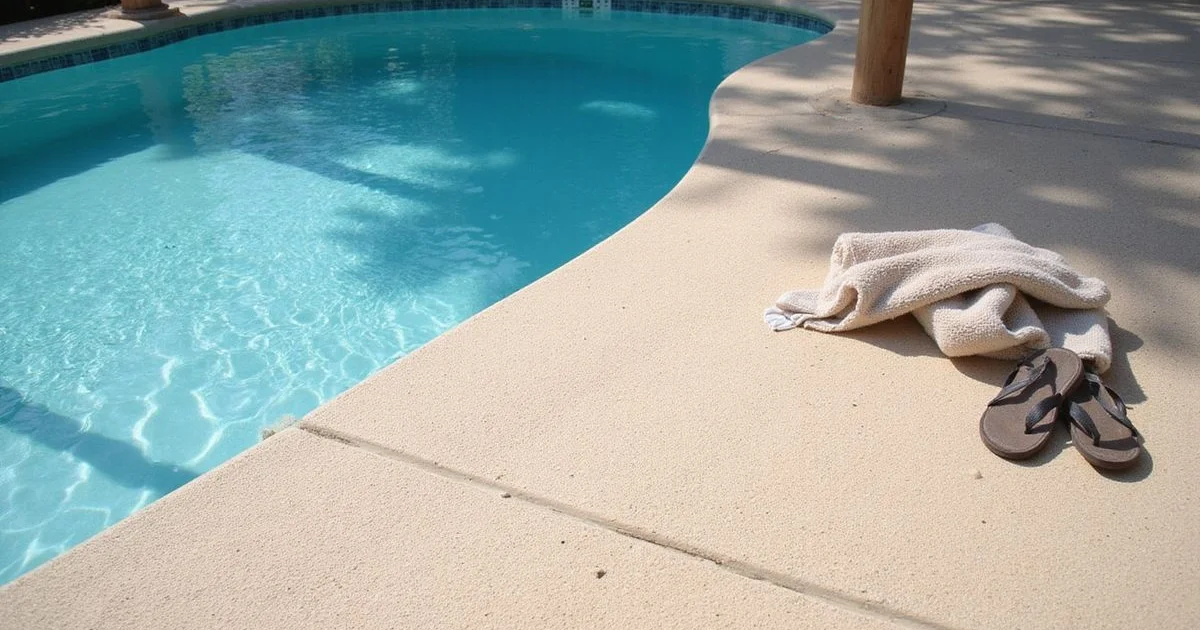
The Two Complaints We Hear Every Summer
It is too hot to walk on, and someone slipped on it.
Both are solvable at the specification stage and very difficult to fix afterwards, which is why this conversation belongs before the work rather than after. The service side of this is covered under patio resurfacing; this guide is about the choices that make a patio usable in August.
Heat: What Actually Helps
Colour does the most. Lighter surfaces reflect more solar energy and run cooler than dark ones. That is not marketing, it is how radiant heat works, and the difference on a fully exposed slab in August is large enough to change whether the space gets used.
This is a genuinely difficult trade-off, because dark charcoal and deep walnut patios photograph beautifully. We will tell you honestly what a dark exterior colour means for barefoot comfort before you commit to it.
Texture helps next. A textured surface presents less continuous contact area to the sole of the foot and holds less heat in the top layer than a dense, smooth, sealed surface. Cool-deck style and knockdown finishes are specified for exactly this reason.
Shade beats both. A pergola, an awning, or a tree does more than any finish decision. On a west-facing slab with no shade, colour and texture will improve the situation and will not solve it, and we would rather say that than sell you a finish that disappoints.
Traction: Specified, Not Retrofitted
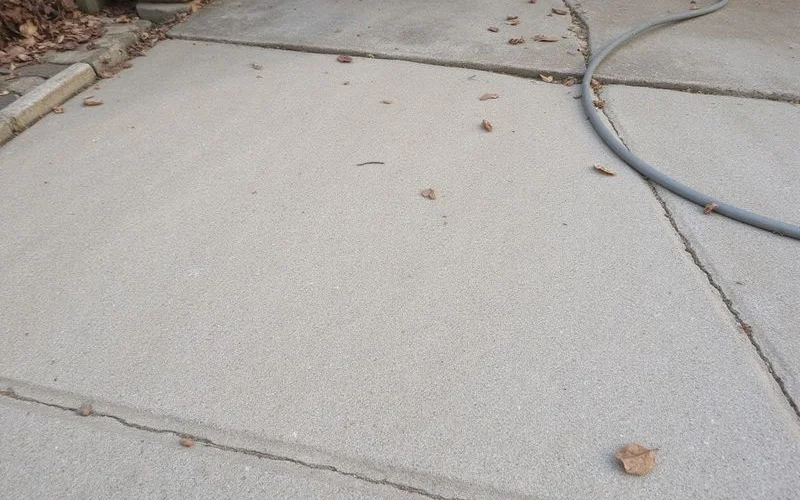
Wet exterior concrete is where people get hurt, and the difference between a surface that grips and one that does not is decided before the sealer goes down.
Surface texture does most of the work. Knockdown, broom, and cool-deck finishes all provide a mechanical profile that gives shoes and feet something to hold.
Slip-resistant additives are broadcast into the sealer coat, adding fine texture at the very surface. Coarser additives give more grip and hold more dirt; finer ones are easier to clean and give less. We match the grade to the location: more aggressive on steps and around water, gentler on a dining terrace.
Sheen matters too. Gloss is not inherently slippery, and the film-forming sealers that produce gloss tend to be smoother, so in practice high-gloss exterior finishes are the most hazardous choice.
Where to be uncompromising
Steps, pool coping, thresholds, and any surface with a fall. These are where slips turn into injuries, and the cost of specifying properly there is trivial compared with the alternative.
Sealers That Survive the Sun
Exterior sealers face UV, thermal cycling, and water in a way interior products never do.
UV-stable exterior formulations resist yellowing. Penetrating silane-siloxane sealers work inside the surface rather than forming a film, which suits exposed slabs and reduces the risk of clouding from trapped moisture. Film-forming decorative sealers give richer colour and demand more maintenance in return.
Expect renewal sooner than indoors. That is the cost of exposure, not a product failure, and knowing it up front makes the maintenance feel like a plan rather than a disappointment.
A Realistic Specification for a Hot Patio
| Decision | Recommended for exposed slabs |
|---|---|
| Colour | Lighter end of the range |
| Texture | Knockdown or cool-deck style |
| Sealer | UV-stable exterior, low sheen |
| Additive | Slip-resistant, graded to location |
| Shade | Worth more than all of the above |
The Things People Try That Do Not Work
A few fixes come up repeatedly and deserve a straight answer.
Painting the patio a light colour. Concrete paint on an exterior slab peels, and it peels fastest in exactly the high-traffic, sun-exposed areas you were trying to improve. Colour needs to go into the surface or into a proper resurfacing system, not onto it as a film.
Hosing it down before use. It works for about ten minutes and it leaves you with a wet, more slippery surface in the meantime.
Outdoor rugs. They help underfoot and they trap moisture beneath them, which causes discolouration and, on a sealed surface, can mark it. If you use them, lift them regularly.
A clear sealer over a dark existing surface. It adds sheen, not coolness, and a glossier surface is more slippery. This is the change most likely to make the situation worse rather than better.
The interventions that genuinely move the needle are shade, lighter colour, and surface texture, in that order. Everything else is comfort around the edges.
Getting It Right Before Next Summer
Exterior work is weather-dependent, and the good application windows in Central Texas are narrower than people expect. Planning a patio in spring for the following summer is comfortable. Deciding in July is not.
If you are working out whether a stained exterior surface suits your slab at all, start with stained concrete patio suitability and care, then come back to these decisions.